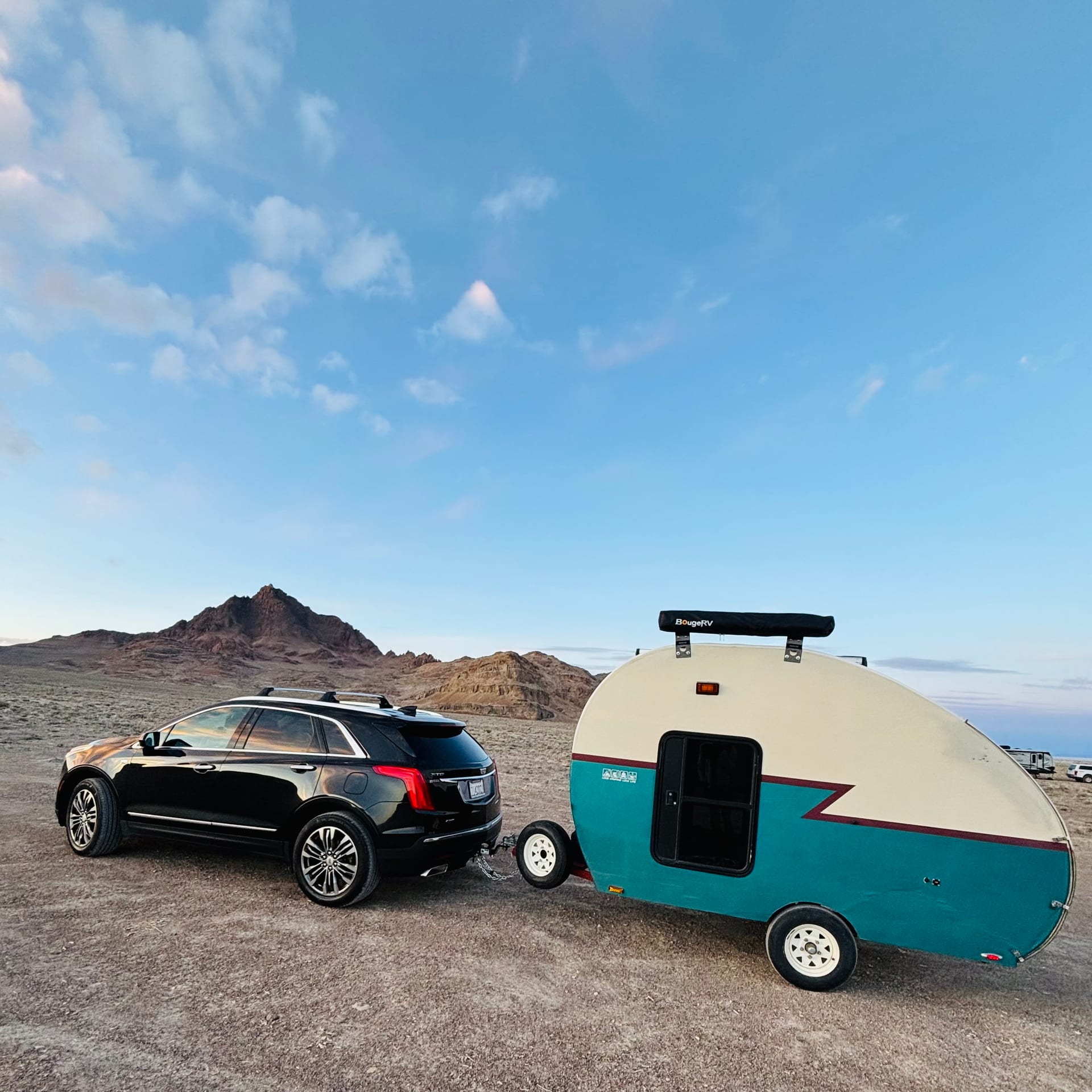
The Maiden Voyage: 2 Nights Off-Grid at Bonneville Salt Flats
Pearl's first real trip — 2 nights of dispersed camping near Volcano Peak, a solo summit hike with no trail markers, Starlink in the desert, and an evening drive across the endless white of Bonneville Salt Flats.
I’d been building Pearl for months. Researching gear, wiring the electrical system, debating mattress toppers, watching YouTube builds at 2 AM. At some point you have to stop preparing and actually go.
So I did.
This is the story of Pearl’s maiden voyage — her first real trip. Two nights of dispersed camping in the Utah desert, completely off-grid, near a place most people only know from land speed records: Bonneville Salt Flats.
Why Bonneville Salt Flats
If you haven’t been, Bonneville Salt Flats is one of those places that doesn’t feel real until you’re standing on it.
Located in northwestern Utah, about 100 miles west of Salt Lake City, it’s a 30,000-acre expanse of perfectly flat, blindingly white salt crust left behind by ancient Lake Bonneville. The surface is so flat and hard that it’s been the site of land speed records since the 1930s — this is where drivers have pushed past 600 mph in rocket-powered cars. The Bonneville Speedway is legendary in motorsport history.
But beyond the speed records, it’s just an incredibly surreal landscape. White ground stretching to the horizon in every direction, mountains floating in the distance, and on clear days the sky and salt merge into something that looks more like a rendering than a real place.
I wanted Pearl’s first trip to feel significant — somewhere that matched the magnitude of finally getting out there. Bonneville was two and a half hours from home in Utah County. Close enough for a maiden voyage, remote enough to feel like I’d actually left.
Day 1 — The Drive Out and First Night
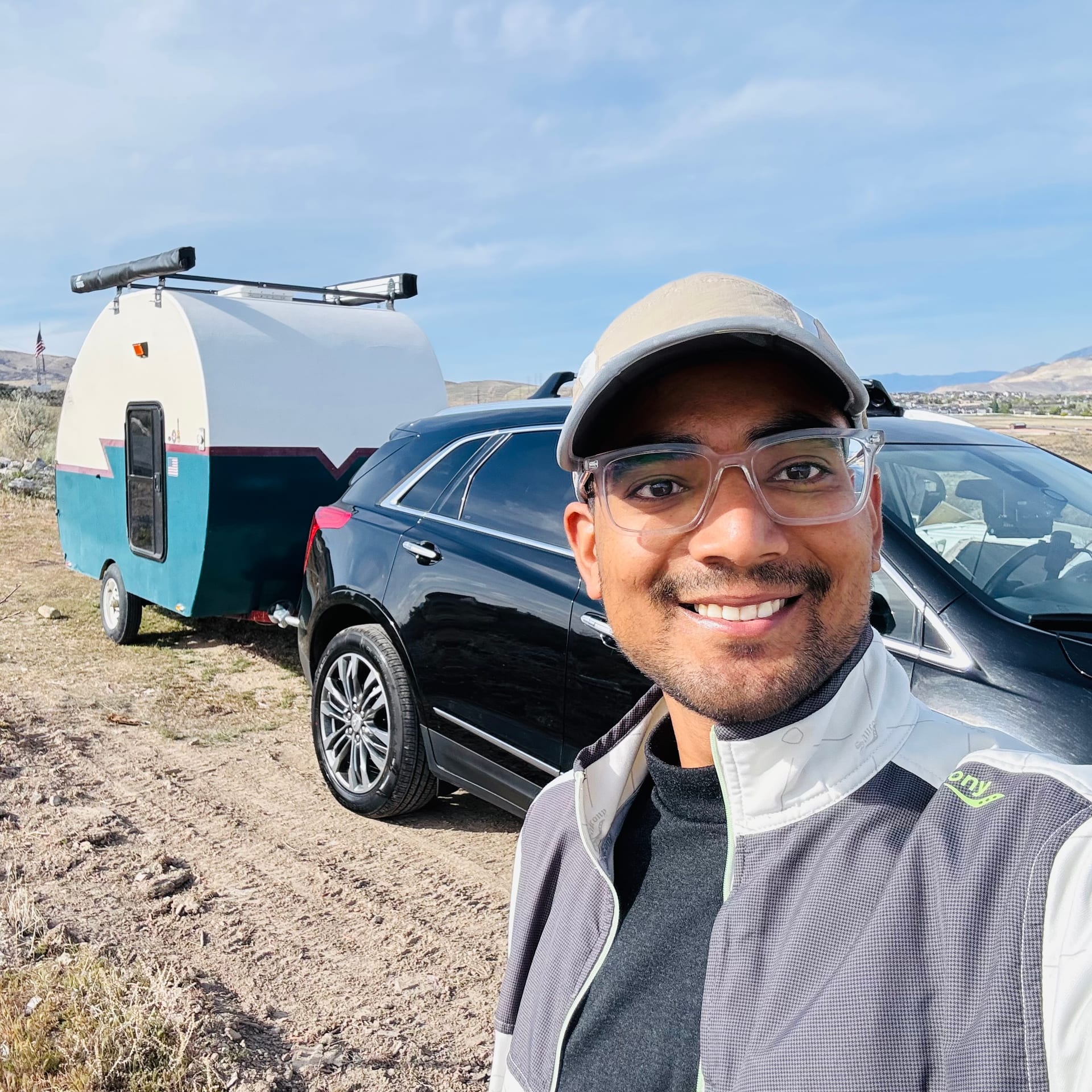
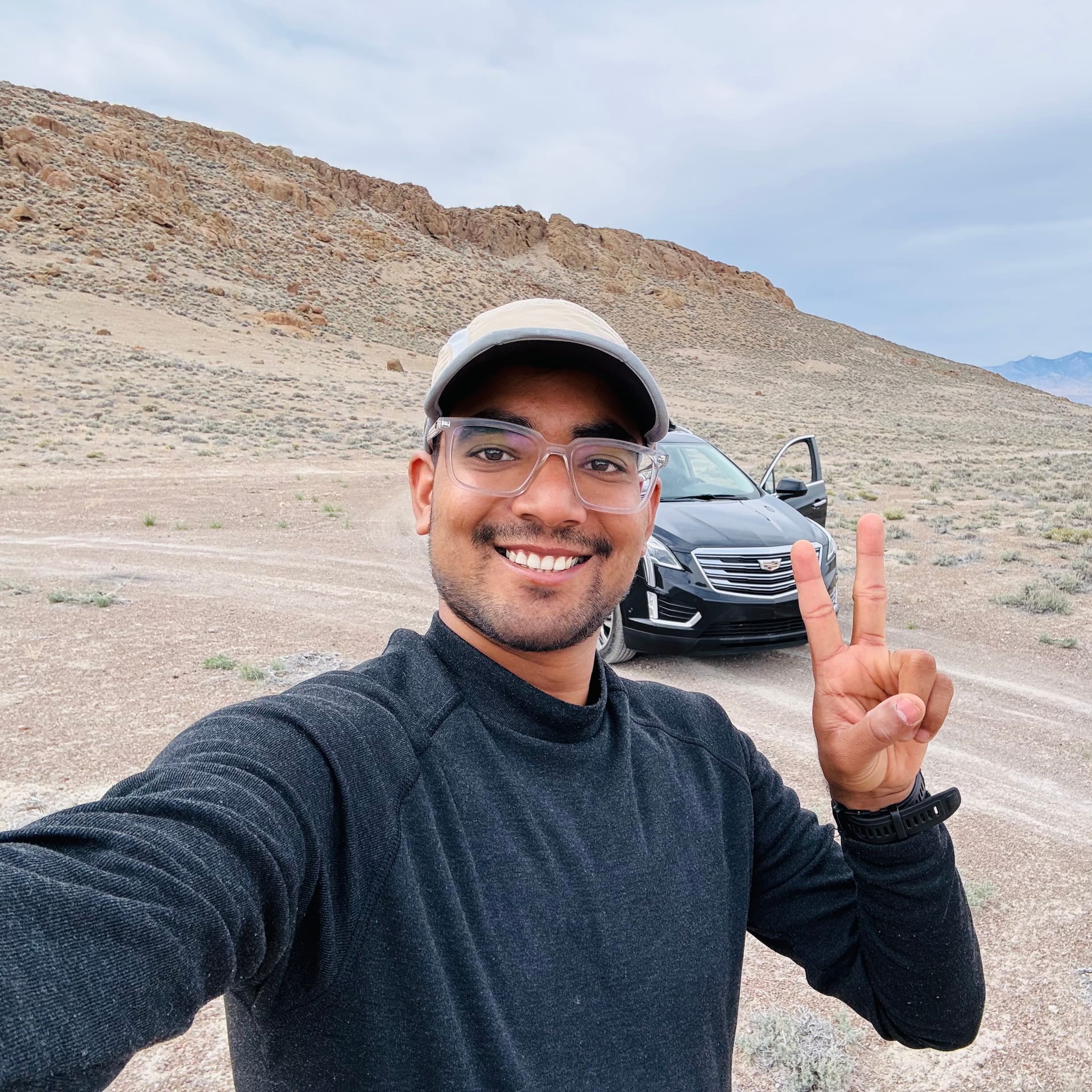
The drive west on I-80 is deceptively beautiful. (My Subaru was at the dealer that week — I made this trip in a Cadillac XT5 loaner, which turned out to be a perfectly capable tow vehicle for the occasion.) You pass through the Wasatch Front, skirt the edge of the Great Salt Lake, and watch the terrain slowly flatten into open desert. About two hours in, the mountains pull back and the landscape opens up into something vast and quiet.
I wasn’t heading to the main Salt Flats viewing area. I turned off toward the Silver Island Mountains — a rugged range that rises out of the desert floor just north of the flats. The BLM (Bureau of Land Management) manages this land, and dispersed camping is allowed — no reservations, no fees, no designated sites. You find a spot, park, and that’s home.
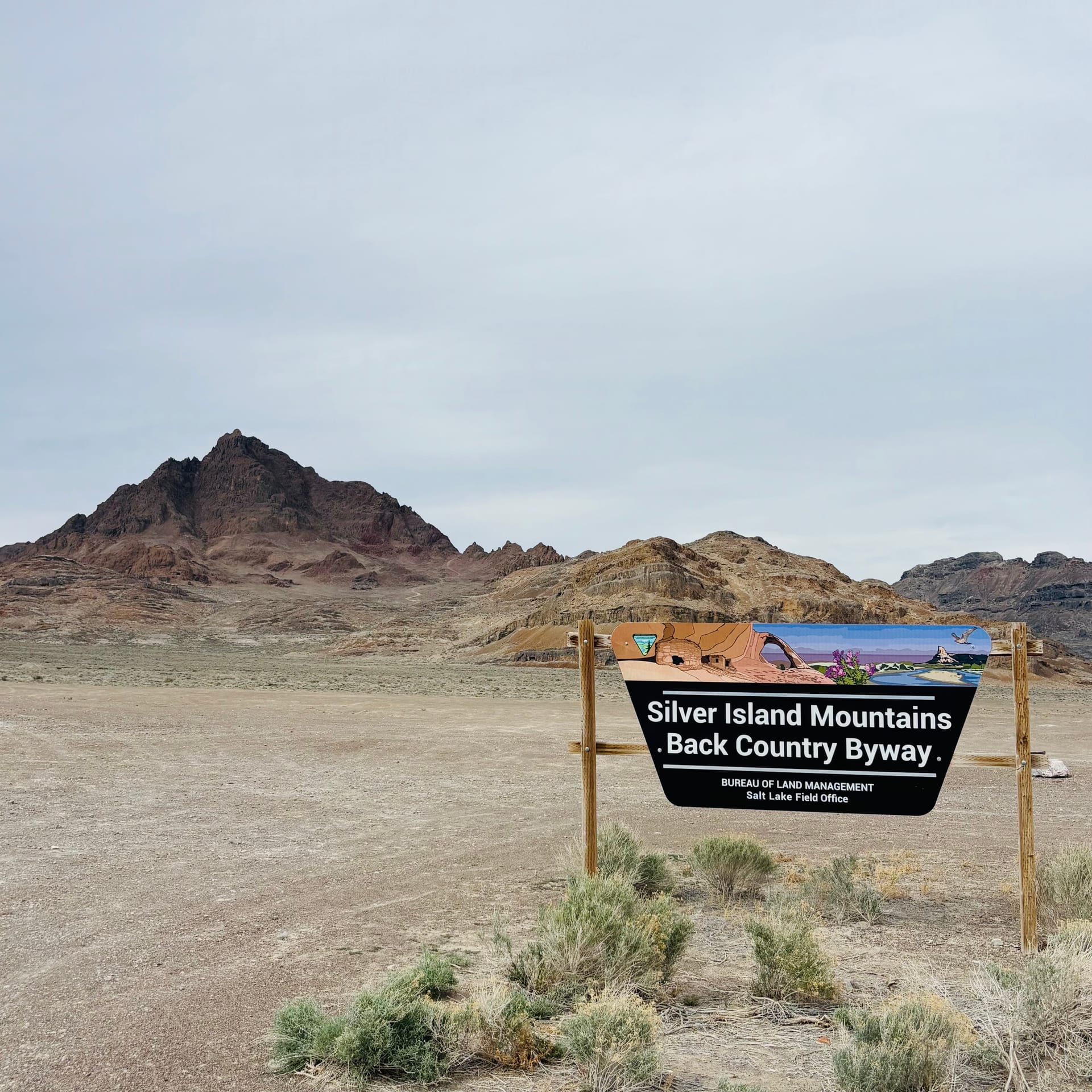
I drove along a dirt road that threads between the mountains and found a flat clearing near Volcano Peak. No one else around. No buildings, no signs, no infrastructure. Just desert, mountains, and silence. (Here’s roughly where I camped — BLM dispersed, no designated site.)
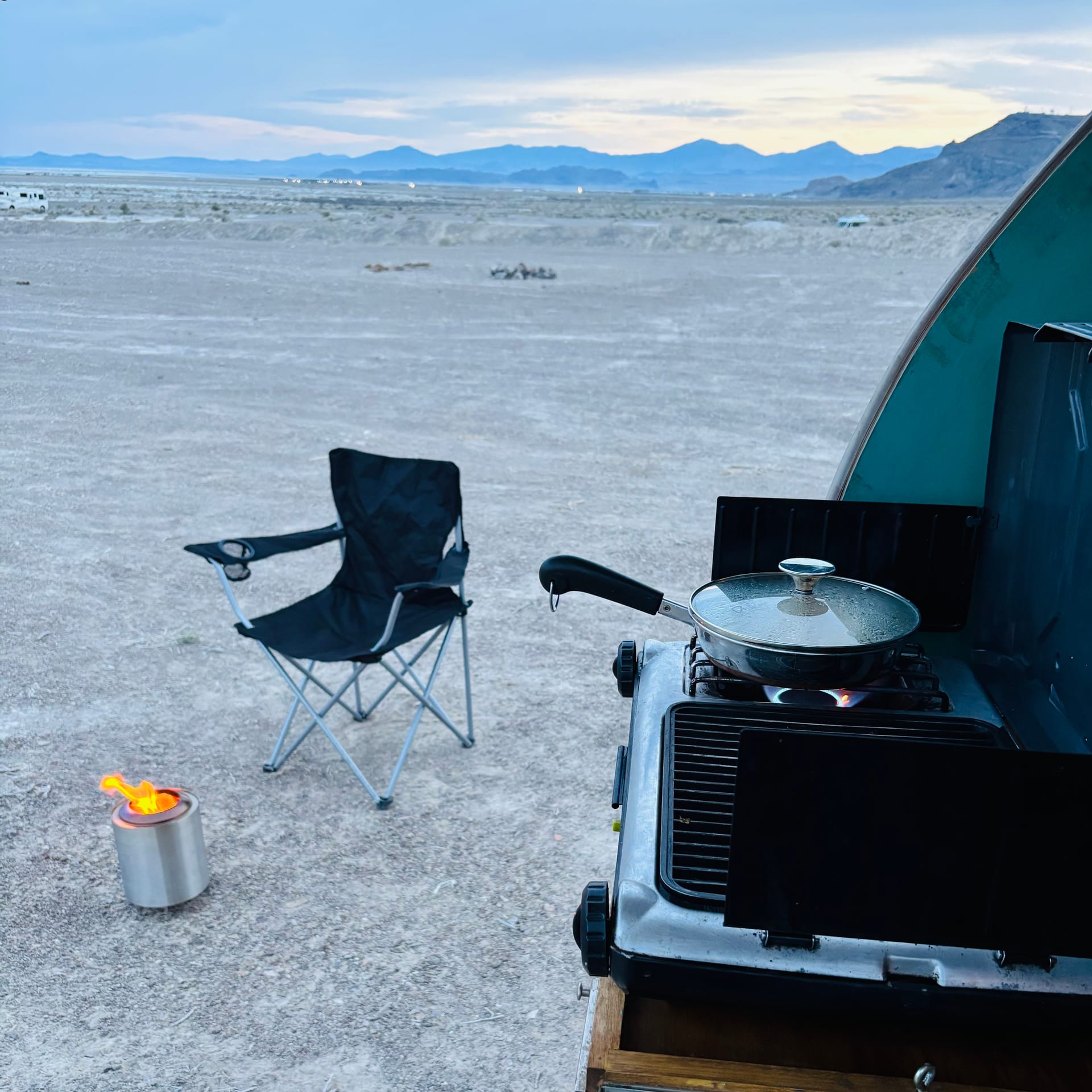
Setting up camp for the first time was a mix of excitement and mild anxiety. Every piece of gear I’d spent months choosing was about to get its first real test. The galley opened up, the camp stove came out, the Dabbsson 2kW power station hummed to life. Everything worked. Pearl was doing exactly what she was built to do.
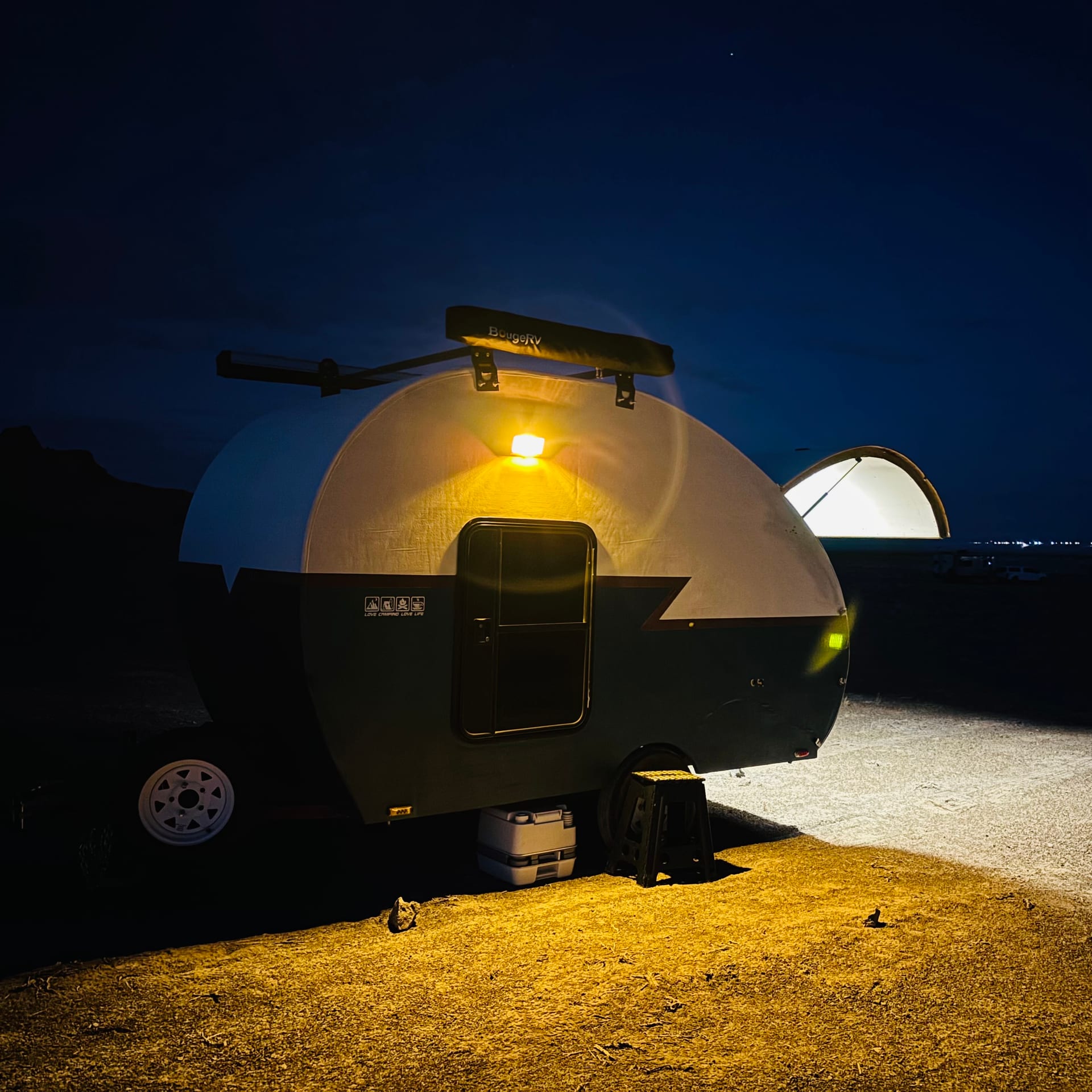
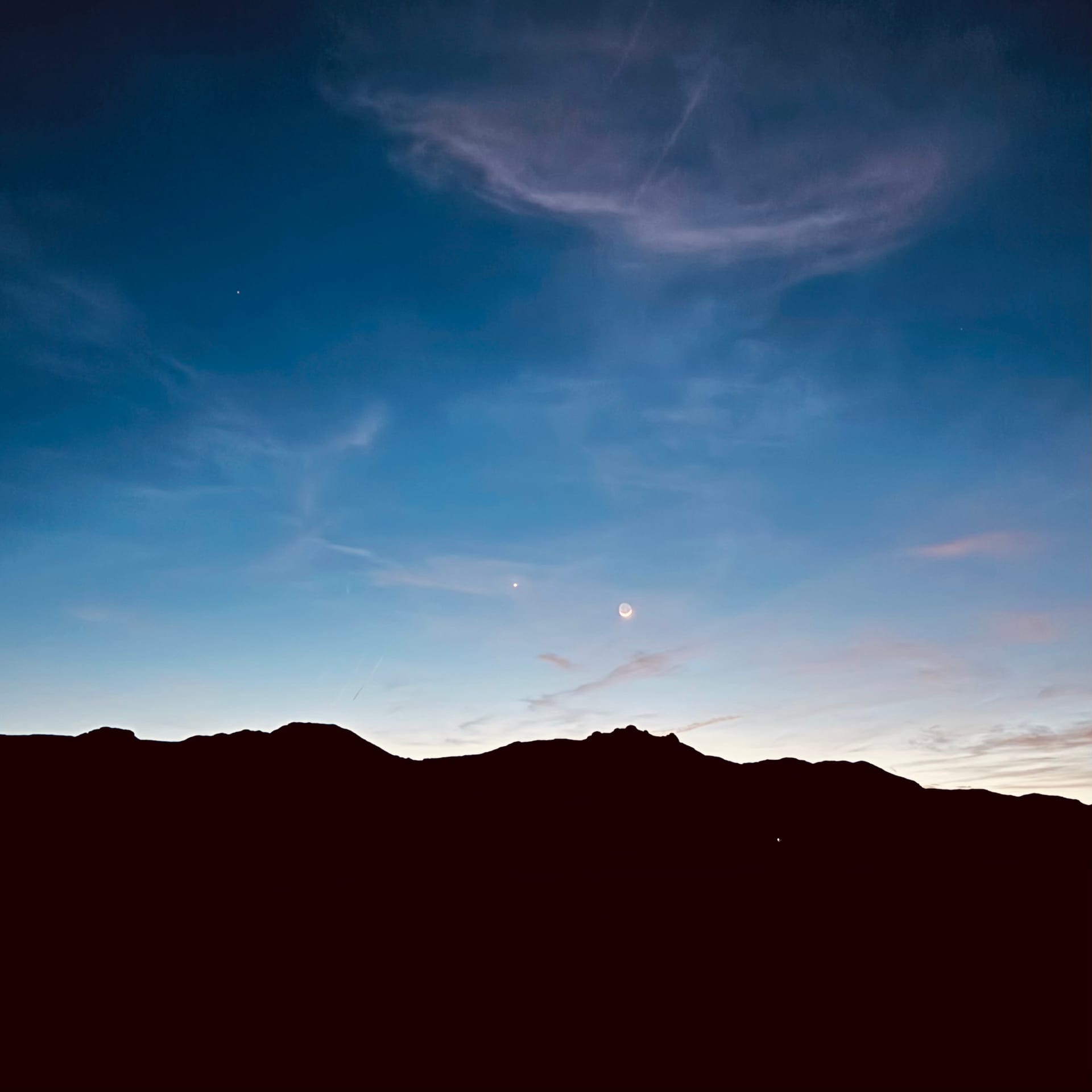
That first evening was something I won’t forget. The sun dropped behind the mountains, the sky cycled through orange and pink and deep blue, and then — quiet. Not the kind of quiet where you can still hear a highway in the distance. Actual quiet. The kind where you hear your own breathing and nothing else.
I sat outside with a cup of chai, watching stars appear one by one, and thought: this is exactly why I got Pearl.
Day 2 — Summit, Salt, and Solitude
Morning: Chai with a View
I woke up to mountains in every direction and not a single sound. No alarm — just light filling Pearl’s cabin through the side window.
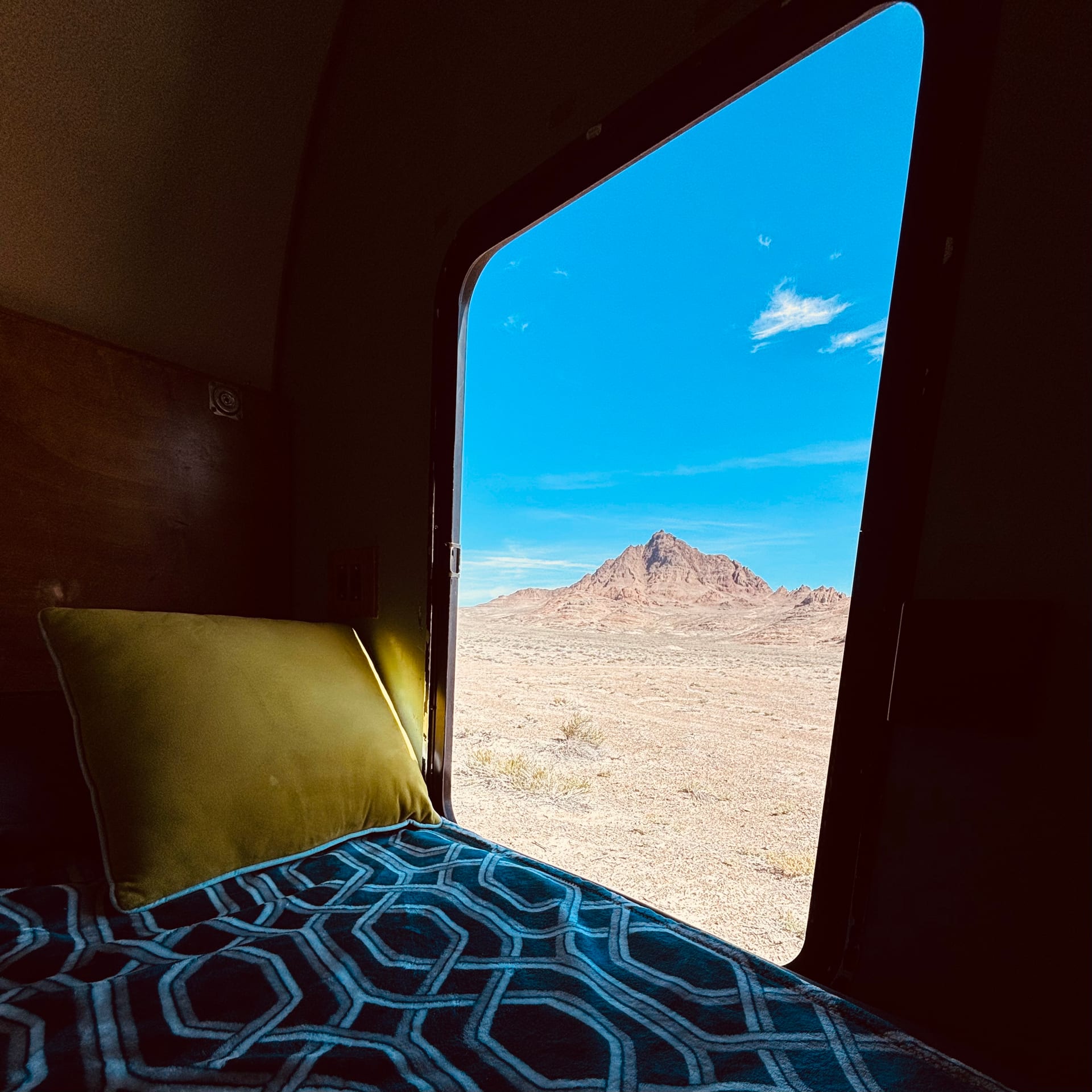
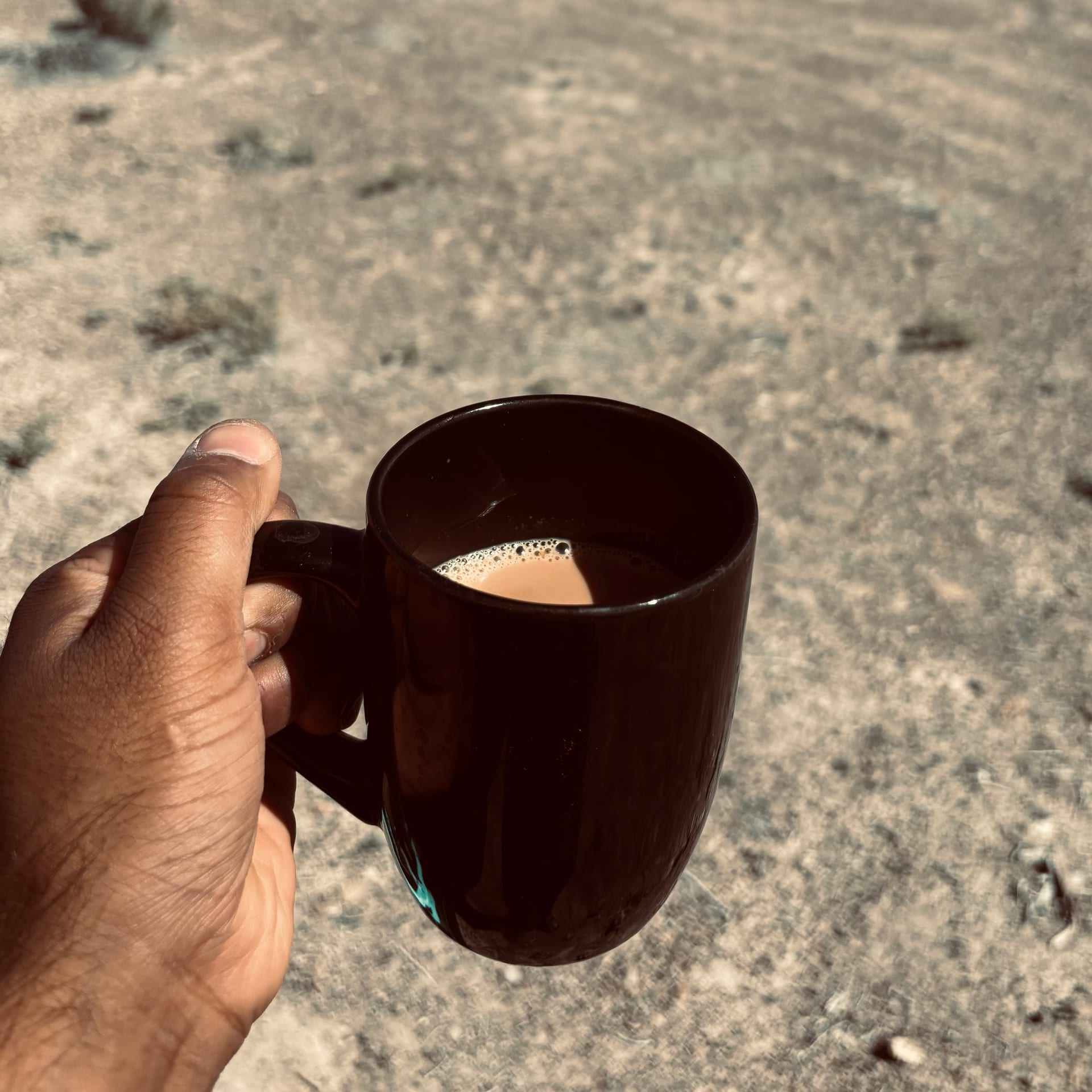
I made chai on the camp stove, heated up leftover palak paneer and chana raita, and sat in my camp chair staring at the mountains. No rush. No schedule. That’s the thing about dispersed camping — there’s no checkout time, no neighbor’s generator drowning out the birds, no camp host driving by at 7 AM. It’s just you and whatever you decide to do.
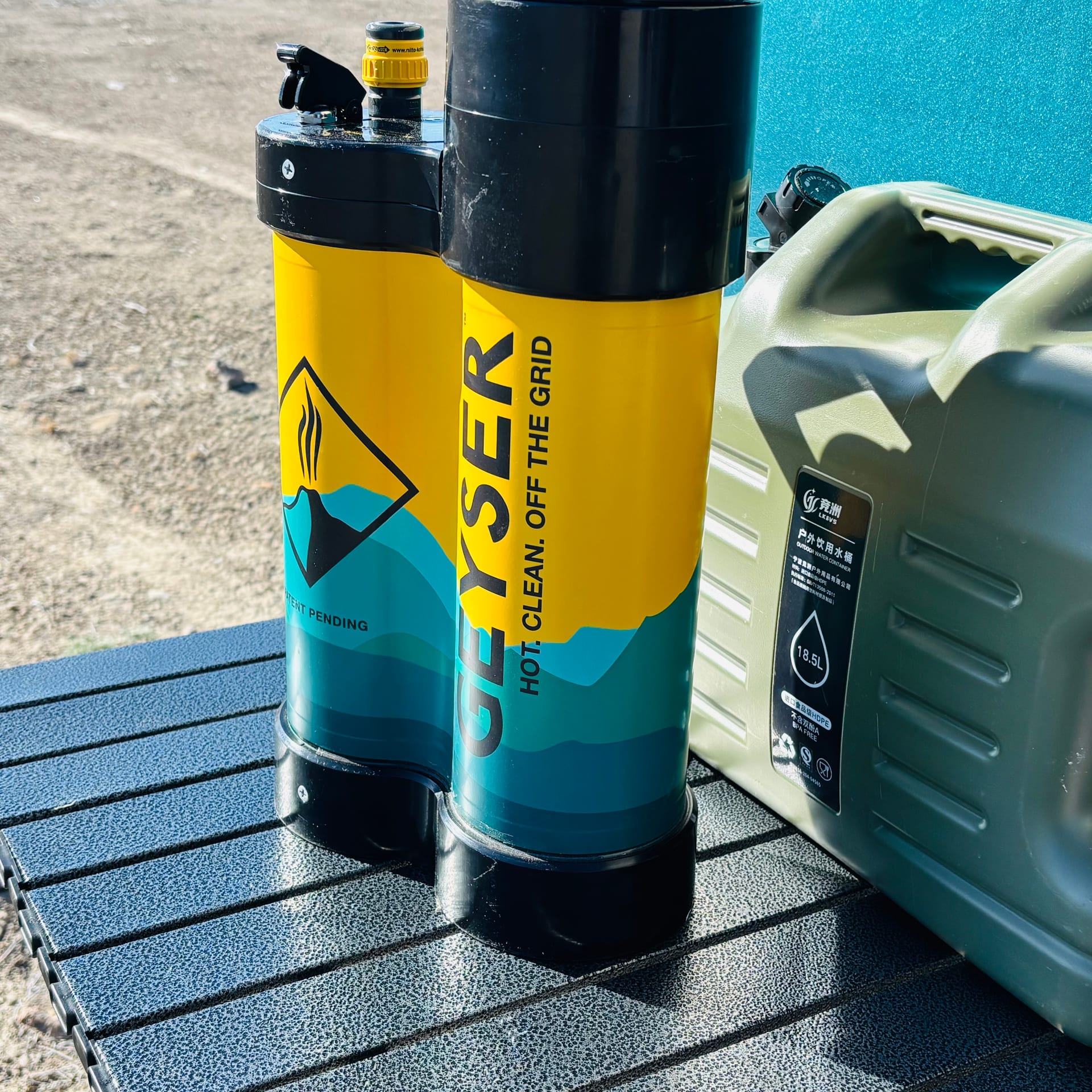
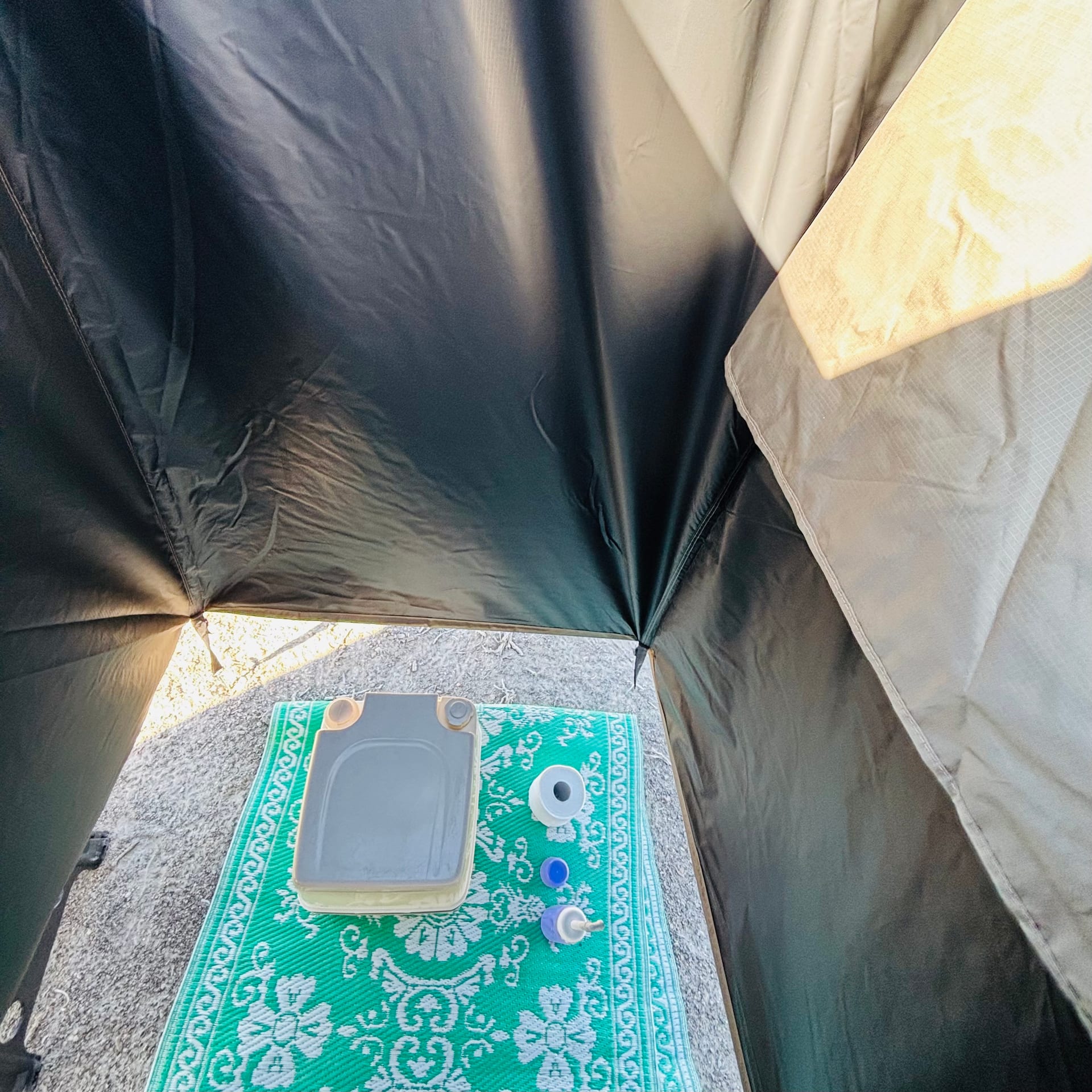
Before heading out for the hike, I got a proper warm shower — which still feels like a small miracle in the middle of the Utah desert. I use a Geyser portable shower — I boil water on the camp stove, fill the reservoir, then plug the pump into the 12V DC outlet on my power station to get real water pressure. Warm, pressurized shower in the middle of the Utah desert. Paired with a popup shower awning and a portable toilet, the setup is fully self-contained. No hunting for a campground shower block, no skipping hygiene for days. One of the things I wanted to prove on this trip was that dispersed camping doesn’t have to mean roughing it in ways that actually matter — and the bathroom setup is a big part of that.
Midday: Hiking Volcano Peak
After breakfast I drove about 15 minutes to the Volcano Peak trailhead. “Trailhead” is generous — it’s more of a pulloff near where the terrain starts to rise. There’s no sign, no trail register, no marked path.
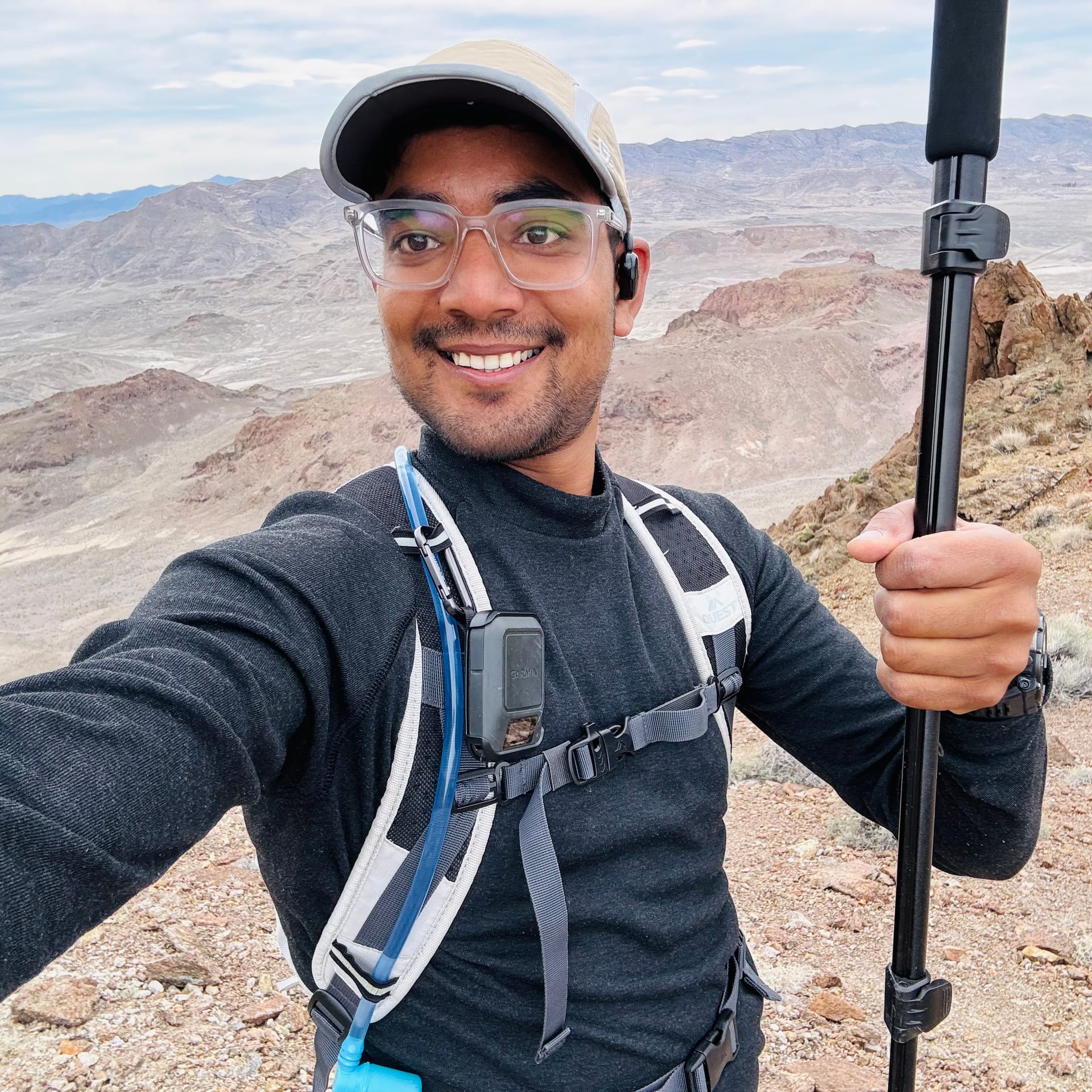
The hike to the summit took about an hour. The route isn’t well-marked — there are faint use trails that fade in and out, and you spend a fair amount of time doing your own route-finding across rock and scree. I didn’t see a single other person the entire time. No footprints, no cairns, no trail runners. Complete solitude.
I had zero cell service out here — not even a flicker of signal. I carried my Garmin inReach Messenger clipped to my pack the entire time. It’s the kind of device you hope you never need to use, but in a place like this — alone, no trail, no coverage — it’s non-negotiable. If something had gone wrong, one button press would have triggered an SOS to search and rescue via satellite. That peace of mind is worth every penny of the subscription.
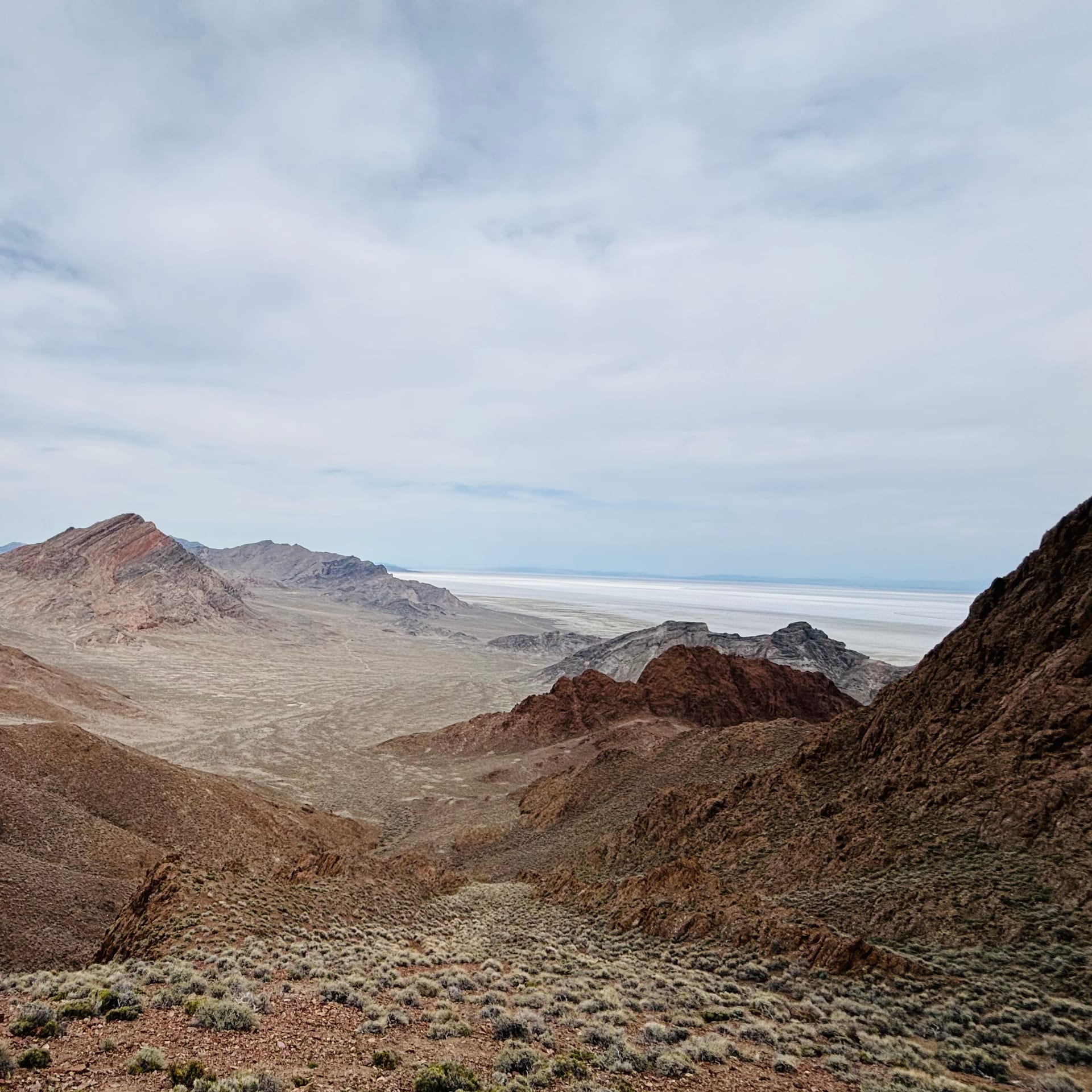
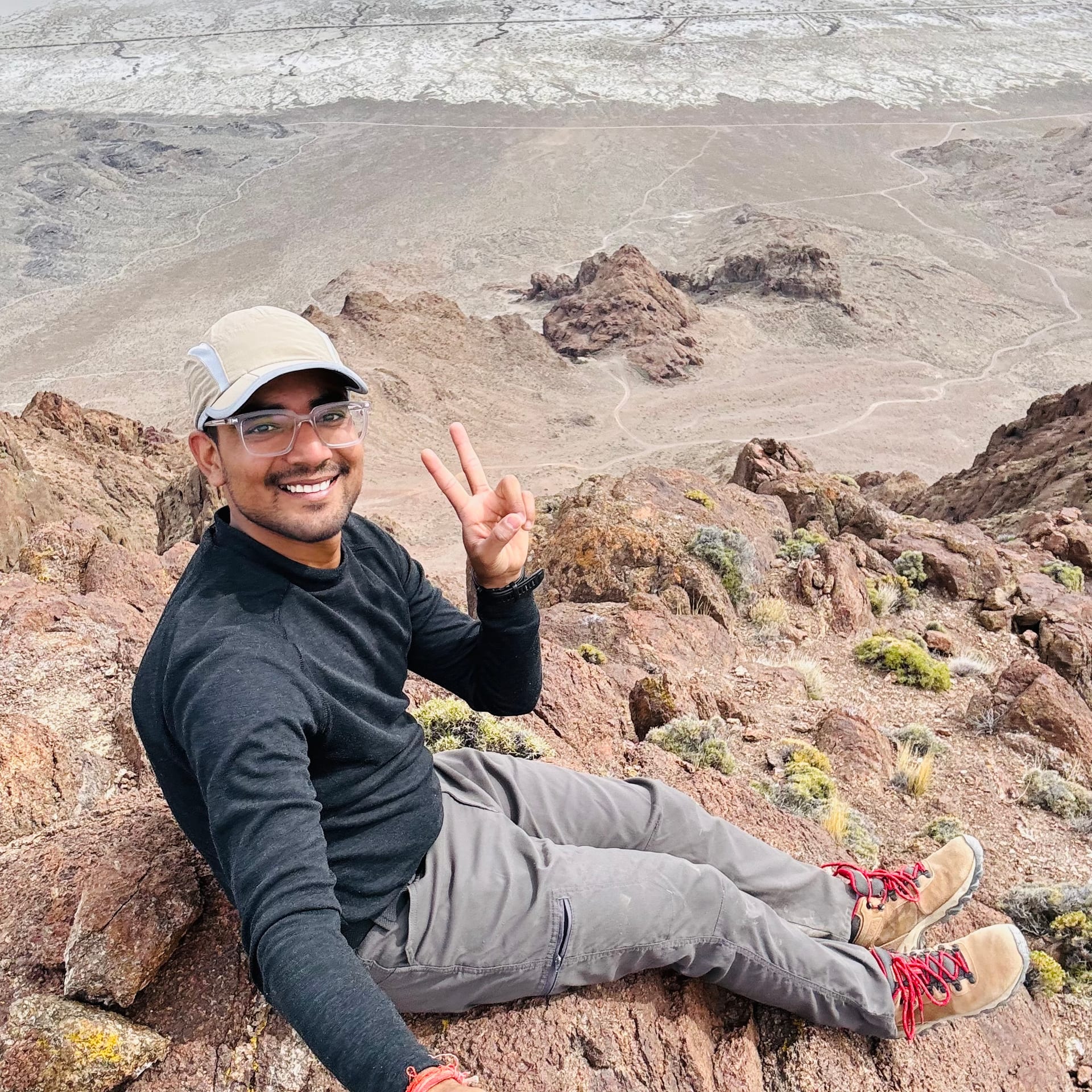
The summit views were worth every scramble. From the top, you can see the Bonneville Salt Flats stretching out to the south — a white sheet against the brown desert — with mountain ranges layered in every direction. The silence up there is different from the silence at camp. It’s bigger. You can feel the scale of the emptiness around you, and it’s humbling in a way that’s hard to put into words.
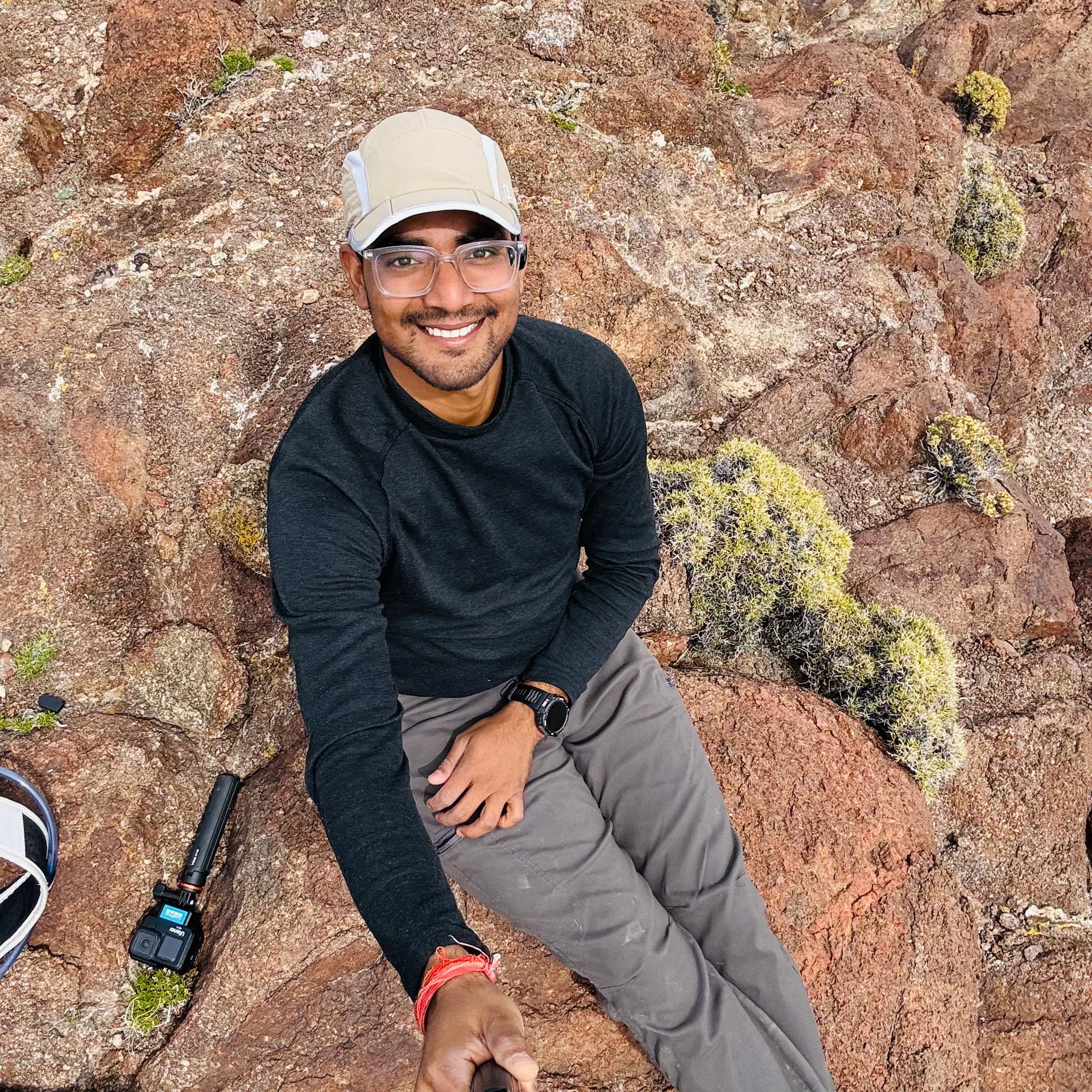
I sat up there for maybe 20 minutes, eating a granola bar and just looking. No podcast, no music. Just wind and rock and sky.
Afternoon: Starlink in the Desert
Back at camp, I made lunch and then did something that still feels absurd every time: I set up Starlink in the middle of the Utah desert and pulled 200+ Mbps internet speeds.
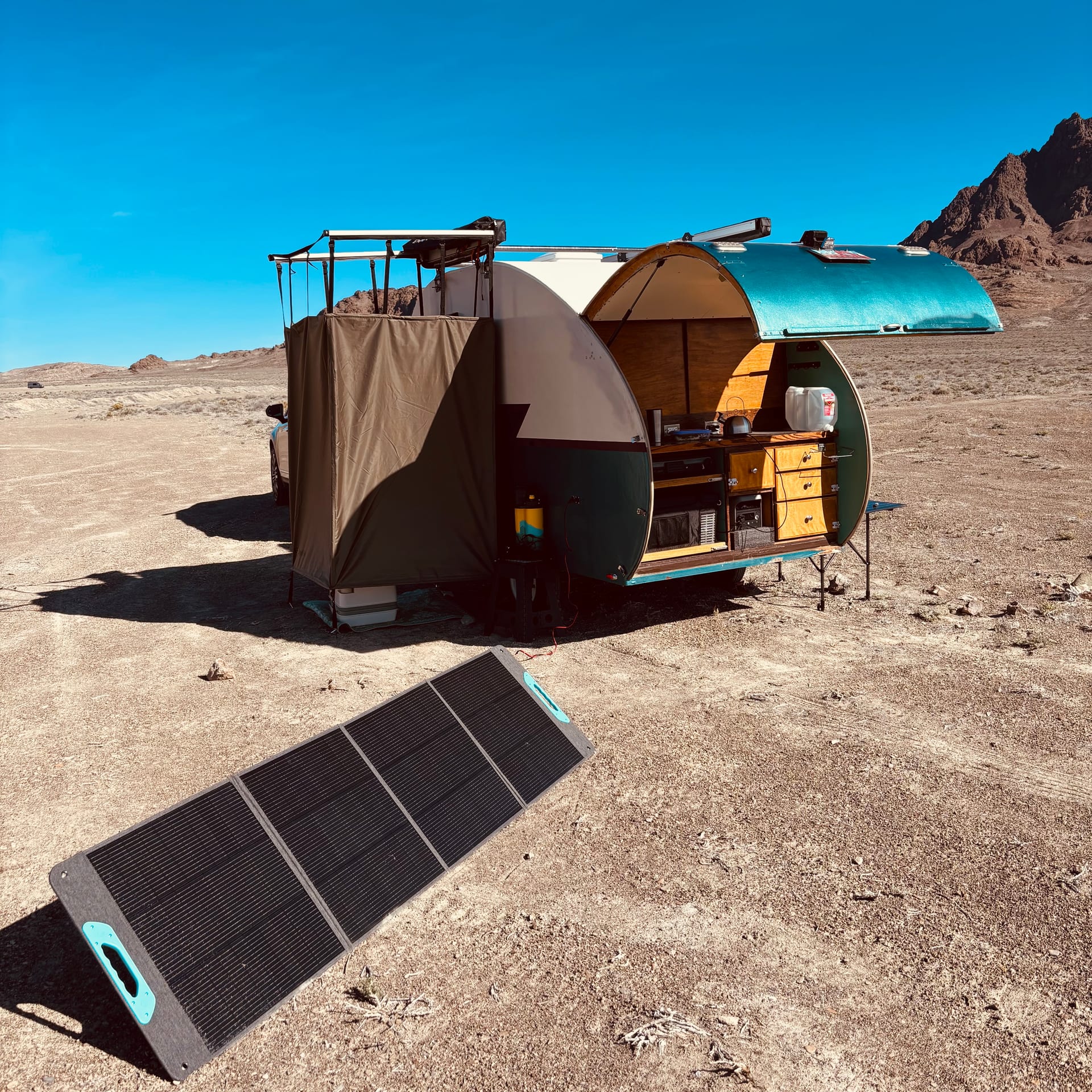
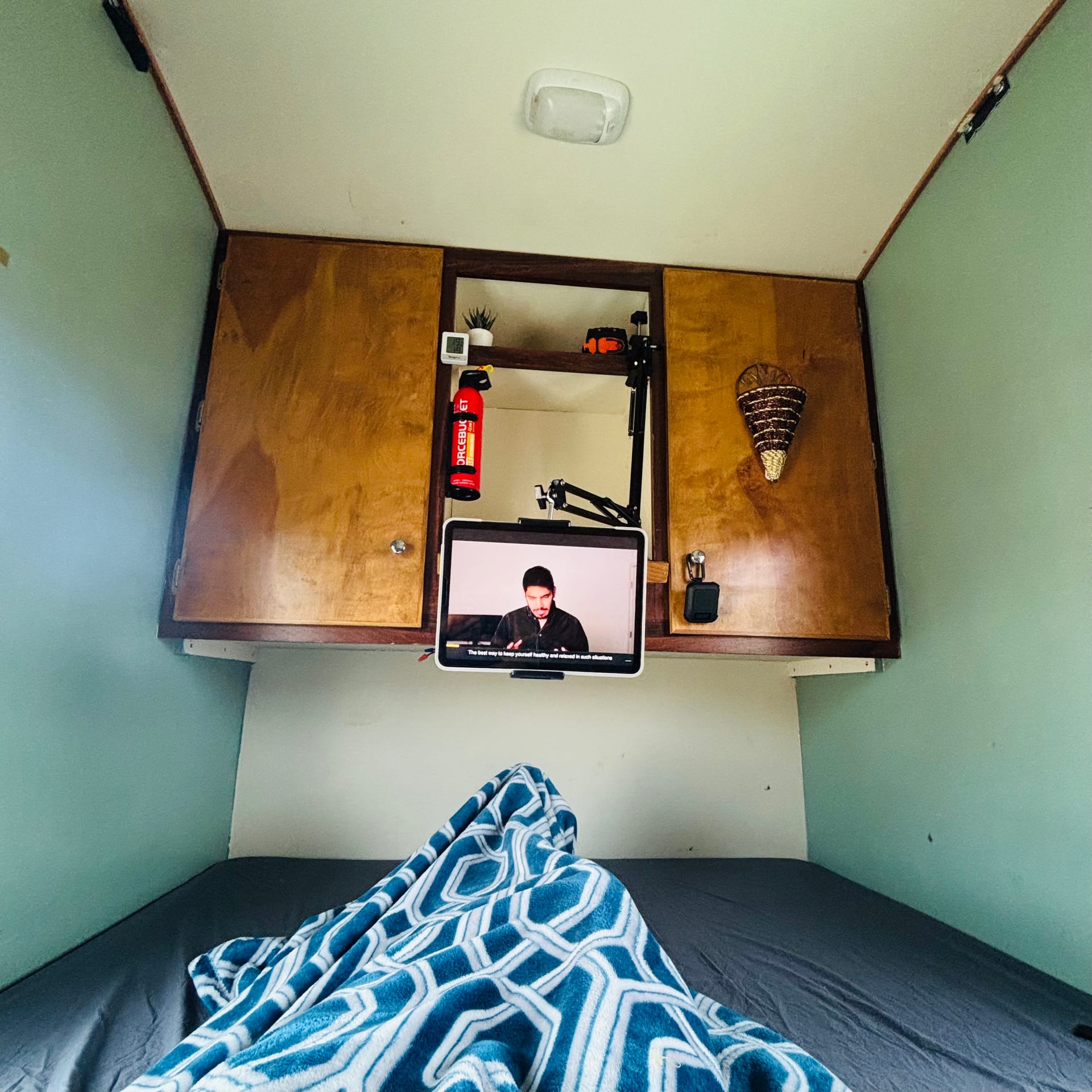
There’s a funny contrast in sitting next to a mountain with zero cell coverage, completely off-grid, running 200W solar panels into a battery bank — and then casually browsing YouTube at speeds that beat most apartment Wi-Fi. The engineer in me appreciates how many layers of technology have to work perfectly for that to happen. Low-earth-orbit satellites 550 km overhead, a compact dish on the ground, and a power system I wired myself keeping it all running.
I spent the afternoon doing absolutely nothing productive and it was perfect. Watched some videos, browsed the internet, drank more chai. The whole point of this trip was to test whether Pearl could handle real off-grid living, and the answer was a clear yes.
Evening: Driving the Salt Flats
Around golden hour, I drove about 10 minutes to the Bonneville Salt Flats themselves.
Driving onto the flats is an experience. The ground transitions from dirt and gravel to a hard, cracked white surface, and then suddenly you’re on what feels like an infinite white plain. There are no lanes, no curbs, no edges — just white ground and sky meeting at the horizon.
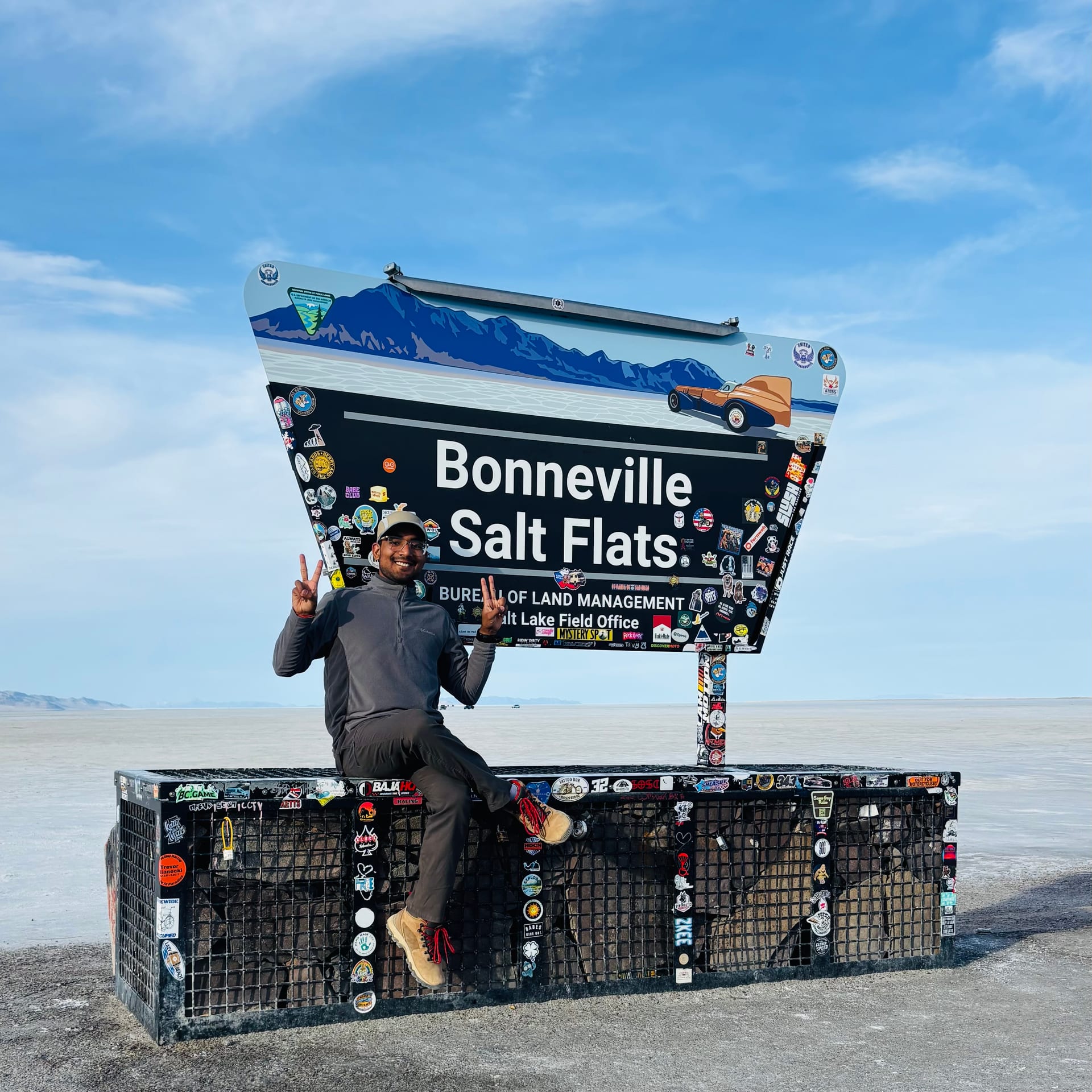
I parked and walked out into it. The salt crust crunches under your feet, and in every direction the ground is perfectly level. Mountains ring the horizon but they feel impossibly far away. It’s one of those places that plays tricks on your sense of scale — things that look close are miles away, and the flatness makes you feel both tiny and infinite at the same time.
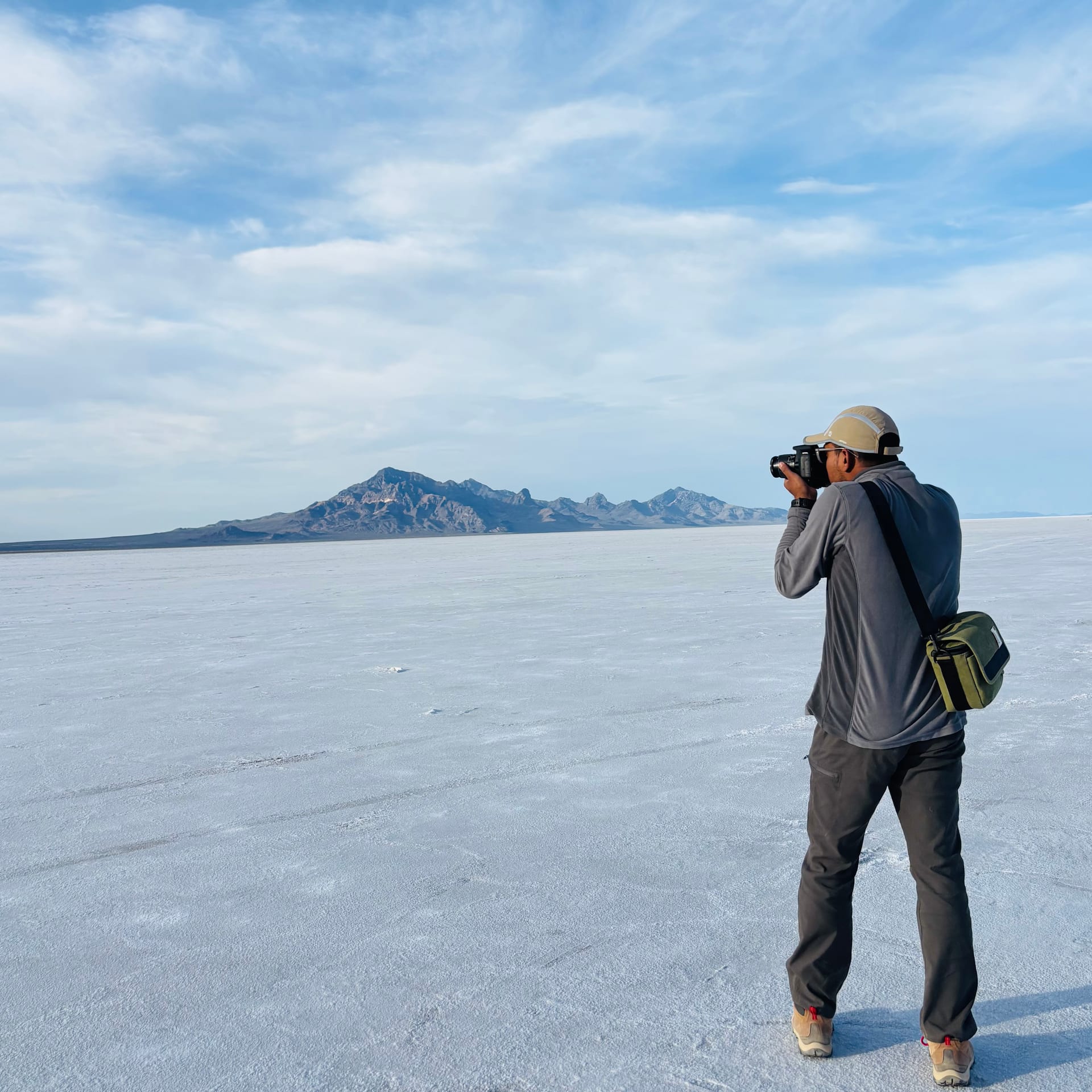
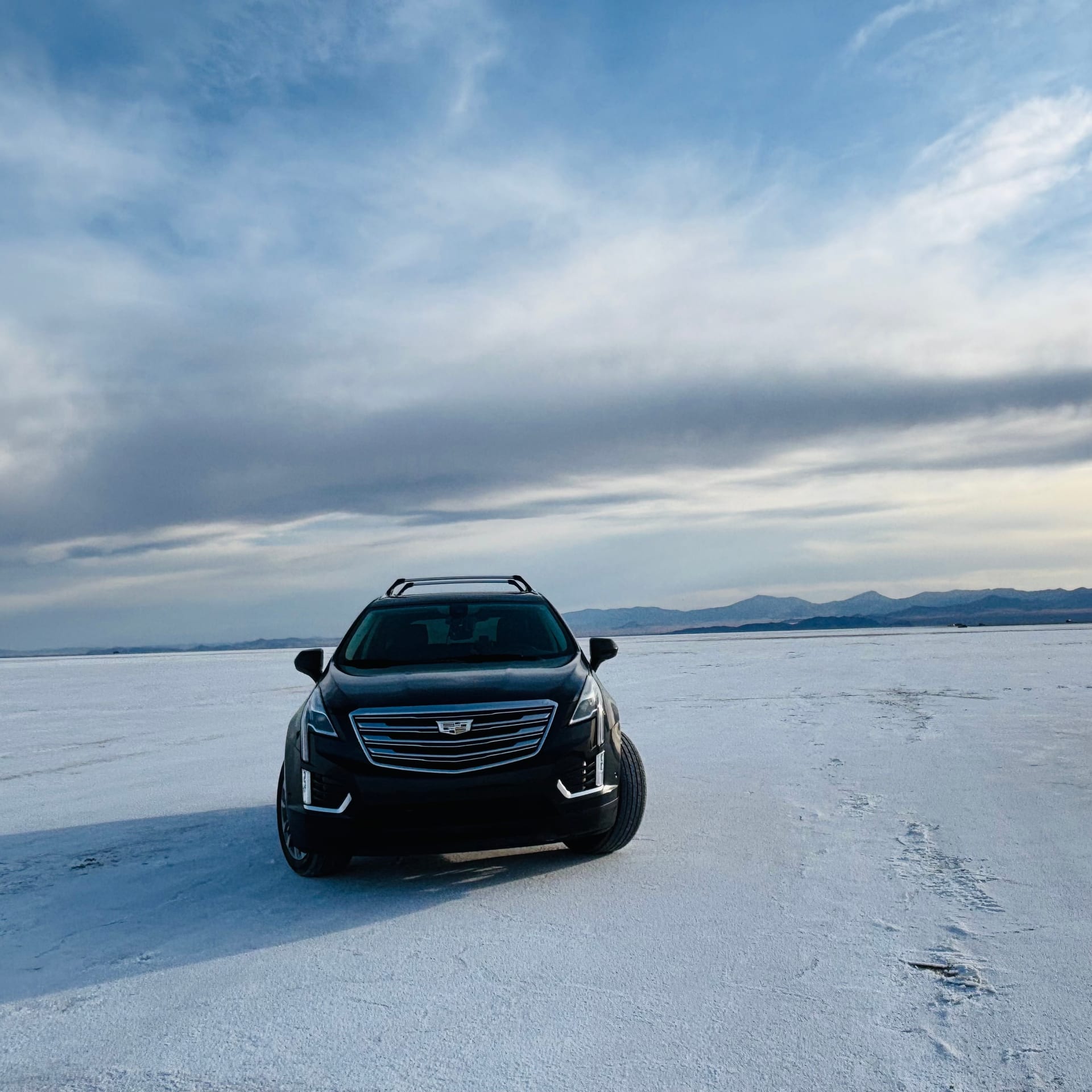
I spent the next hour or so just photographing. The light was incredible — warm and low, casting long shadows across the white surface, the sky shifting through colors that don’t look real in photos but somehow are.
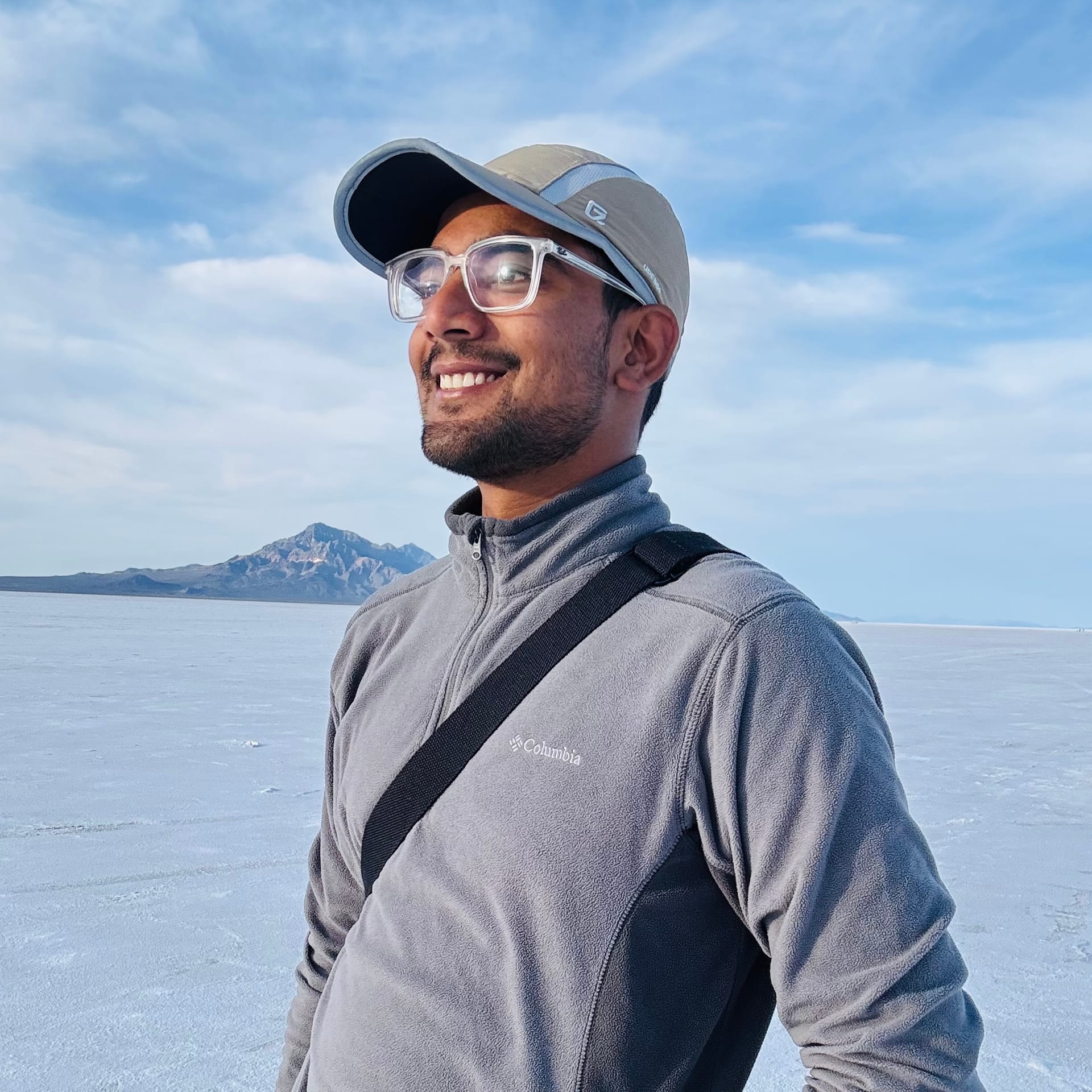
The full edited gallery from this evening is live — browse the Salt Flats album on Lightroom.
Back at camp, I lit the fire pit, made a pot of mushroom soup on the camp stove, and sat under a sky full of stars. The campfire crackled, the mountains were black silhouettes against a deep blue sky, and I thought about how this whole project — buying Pearl, building her out, planning this trip — had led to this exact moment.
Day 3 — Packing Up and Heading Home
Morning came quietly. I made one last cup of chai, packed up camp methodically — stove, chairs, solar panel, Starlink dish, all back in their places — and took a final look at the mountains.
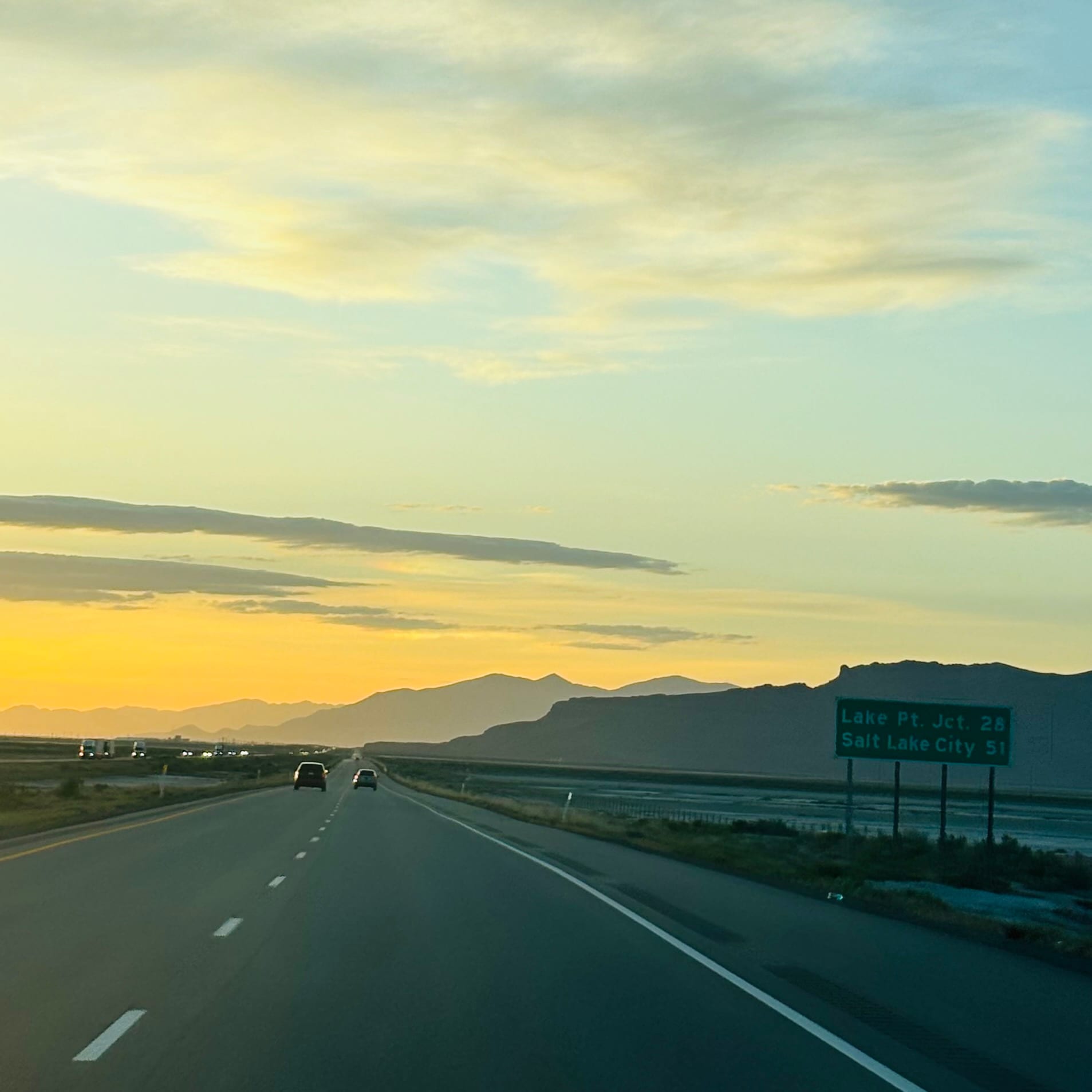
The two-and-a-half-hour drive home was peaceful. I replayed the trip in my head — the hike, the salt flats, the silence, the campfire — and felt something click into place. This wasn’t just a test run. This was proof that the months of building, researching, and second-guessing had produced something real.
Pearl works. Off-grid living works. And I want more of it.
What I Learned on Trip #1
A few honest notes from the maiden voyage, mostly for myself but maybe useful if you’re planning something similar:
Dispersed camping is quieter than you think. I knew it would be remote, but the absence of sound — truly no sound — takes some getting used to. It’s peaceful, but the first night your brain keeps searching for noise that isn’t there.
Route-finding solo requires preparation. The Volcano Peak hike had no trail markers. I used a combination of AllTrails, satellite imagery, and just reading the terrain. Carry a Garmin inReach or similar device if you’re going alone in areas with no cell coverage. It’s not optional.
Starlink changes the math on off-grid trips. Having real internet at camp means I could comfortably extend a trip without worrying about disconnection from work or life. It’s the single piece of gear that makes long-term boondocking viable for someone who works remotely.
Your first trip won’t be perfect, and that’s fine. I forgot a few things, fumbled with the camp stove setup, and spent 10 minutes figuring out how to point the Starlink dish to get a clear sky view. None of that mattered. What mattered was that I went.
Gear That Mattered
Everything I used on this trip is listed on my full gear page, but the standouts for this trip:
- Starlink Mini — high-speed internet in the middle of nowhere
- Garmin inReach Messenger — satellite safety for solo hiking with no cell coverage
- Smokeless Tabletop Fire Pit — compact, smokeless, and perfect for desert evenings
- Dabbsson 2kW power station — ran everything without breaking a sweat
- Renogy 200W portable solar panel — kept the battery bank topped up all day
Final Thought
There’s a specific feeling you get when you’ve been thinking about something for a long time and then you finally do it. It’s not euphoria — it’s more like relief mixed with certainty. Yeah, this is right.
That’s what Pearl’s maiden voyage felt like. Not a vacation. Not an escape. Just the beginning of something I’ve been building toward for a while.
Trip #1 is in the books. Many more to come.