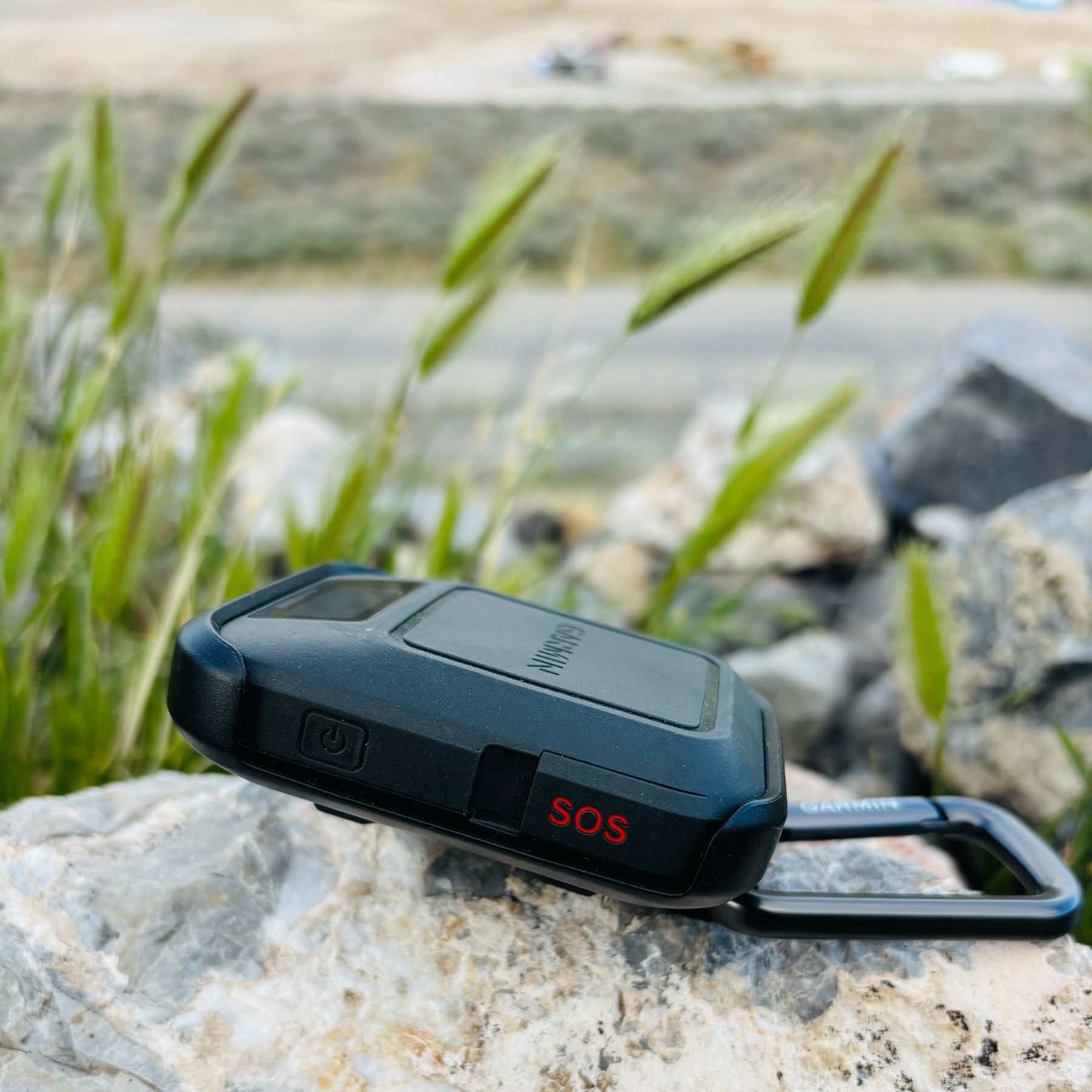
Garmin inReach Messenger Review: The Safety Layer Every Solo Camper Needs
Starlink keeps me connected for work. The Garmin inReach Messenger keeps me alive when nothing else works. Here's why I carry both — and why $7.99/month is the cheapest peace of mind I've ever bought.
Starlink gives me internet. Fast, reliable, satellite internet — anywhere I park Pearl.
But here’s the thing nobody talks about when they buy a Starlink: what happens when you’re not at camp? What happens when you’re three miles into a hike, it gets dark faster than expected, you twist an ankle on loose rock, and your phone shows zero bars?
Starlink doesn’t help you there. Your cell carrier doesn’t help you there. Nothing helps you there — except a dedicated satellite communicator that works from anywhere on Earth, independent of every network you depend on.
That’s why I bought the Garmin inReach® Messenger.
Two Devices. Two Jobs. Both Essential.
I want to be clear about what these two devices are for, because people confuse them:
Starlink Mini — high-speed internet for productivity. Video calls, large file transfers, streaming. Requires power, a clear sky view, and setup time. Not something you grab on a hike.
Garmin inReach Messenger — satellite communication and emergency SOS. Weighs 4 ounces. Clips to your belt loop. Works globally on the Iridium satellite network. No setup, no power station required. This is the device that gets you rescued.
They’re not competing products. They’re a stack. Together, they cover every scenario — connected at camp, safe on the trail.
What I Actually Paid
| Item | Cost |
|---|---|
| Garmin inReach Messenger | $249.99 |
| Garmin Cradle Mount | Check price → |
| Monthly Enabled Plan | $7.99/month |
No contracts. Month-to-month. And unlike Starlink, there’s no standby mode to manage — the $7.99 Enabled plan is the low-cost active tier.
One important note on the Enabled plan: the $7.99 keeps your account active and SOS always available, but messaging is pay-per-use ($0.10–$1.00 per satellite message). For light users — occasional check-ins, the odd weather request — it’s plenty. If you’re messaging regularly, Garmin’s Essential ($14.99/month), Standard ($29.99/month), or Premium ($49.99/month) plans make more sense.
First Impressions
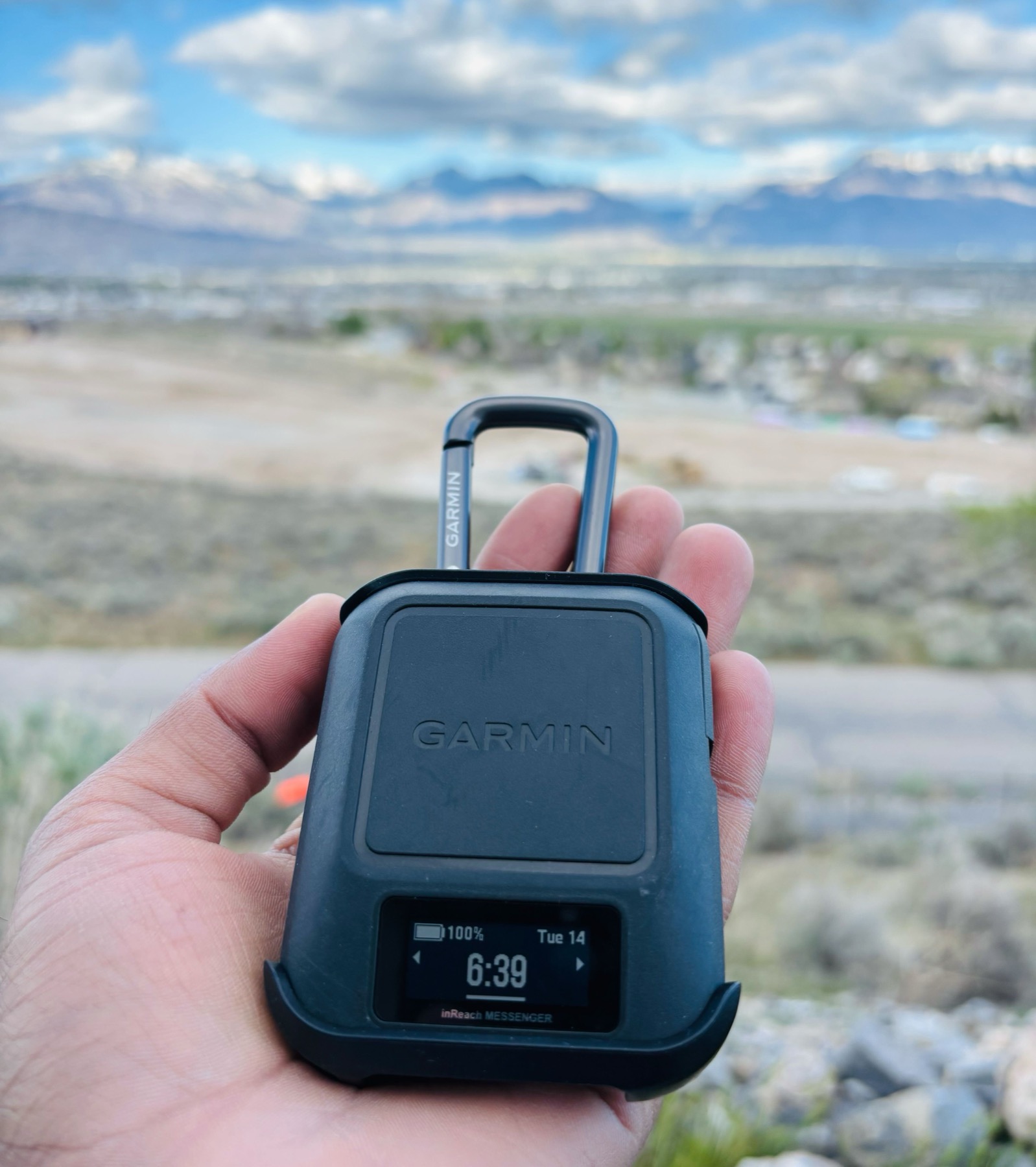
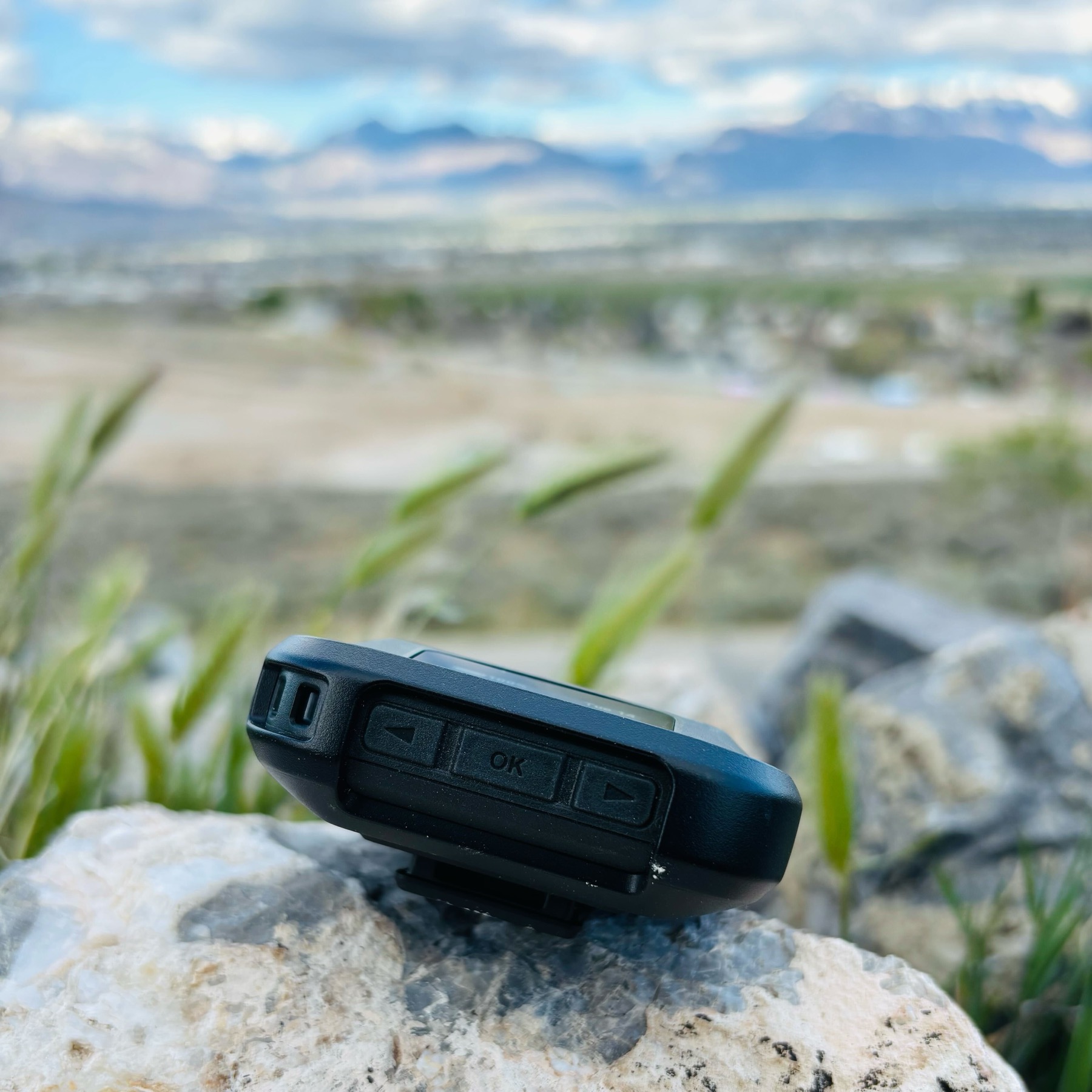
The first thing you notice is how small it is. 4 ounces. Roughly the footprint of a large matchbox, but thicker and rubber-coated. The rubberized housing feels serious — this is not a consumer toy, it’s a piece of outdoor safety equipment.
The small OLED screen shows battery, time, and status at a glance. Three physical navigation buttons handle everything when you can’t or don’t want to pull out your phone. In practice, you’ll do almost all your messaging from the Garmin Messenger app on your phone — the on-device keyboard is functional but slow for anything longer than a short reply.
Pair it to your phone once via Bluetooth and it stays connected. The app syncs automatically. When you’re in cell range, messages route via cellular (free, doesn’t count against your plan). When you lose signal, it silently switches to Iridium satellite. You don’t manage this — it just happens.
What It Actually Does
SOS — The Reason You Buy This
Hold the SOS button for five seconds and you initiate an emergency signal to Garmin Response — a 24/7 search and rescue coordination center. They receive your GPS coordinates, contact local emergency services, and maintain two-way communication with you throughout the rescue. Average response time under 60 seconds.
This works from anywhere on Earth. Antarctica. The middle of the ocean. A canyon in Utah with zero cell signal. The Iridium satellite network has 100% global coverage with no exceptions.
SOS is included on every plan, including the $7.99 Enabled tier. This is not a premium feature — it’s the baseline.
Two-Way Satellite Messaging
Send and receive text messages (up to 1,600 characters) with anyone. The recipient doesn’t need any special app or device — they get a regular SMS or email. You reply via satellite. Back and forth, anywhere in the world.
Voice messages (30-second clips) and photo sharing also work through the Garmin Messenger app. These are charged per-use on the Enabled plan.
LiveTrack & Check-In
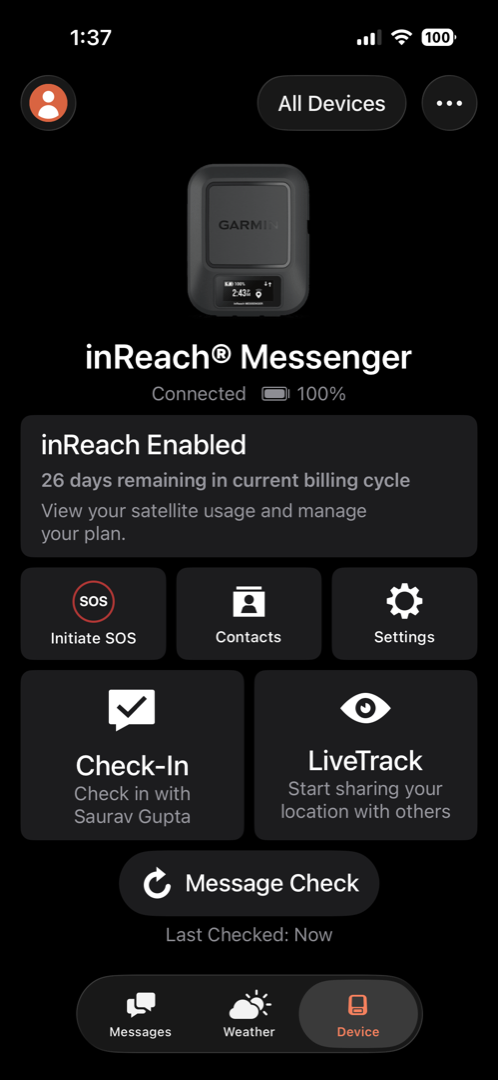
LiveTrack shares your real-time GPS location with whoever you choose via a shareable link — no app required on their end. They watch a map update as you move.
Check-In sends a pre-configured “I’m safe” message with your current coordinates to your emergency contacts. One tap. Takes two seconds. I set mine to check in with a family member at the start and end of every hike.
For solo camping, these two features are worth the subscription alone. Someone always knows where I am.
Weather
Pull current conditions and forecasts via satellite — useful when you’re camped somewhere with no cell signal and a weather system is moving in. Not a replacement for a serious weather app, but reliable for the basics when you’re off-grid.
Battery Life — 28 Days
This is where the inReach Messenger genuinely stands out: up to 28 days in 10-minute tracking mode. For context, that’s roughly double competing devices like the SPOT X or ZOLEO.
Practically speaking, I take Pearl out for 2–4 day weekends. I’ve never worried about battery. I charge it when I get home, like a watch.
One bonus: the device can reverse-charge your phone via USB-C — a small but thoughtful touch when you’re in a pinch.
The Cradle Mount — Built for Backpacking
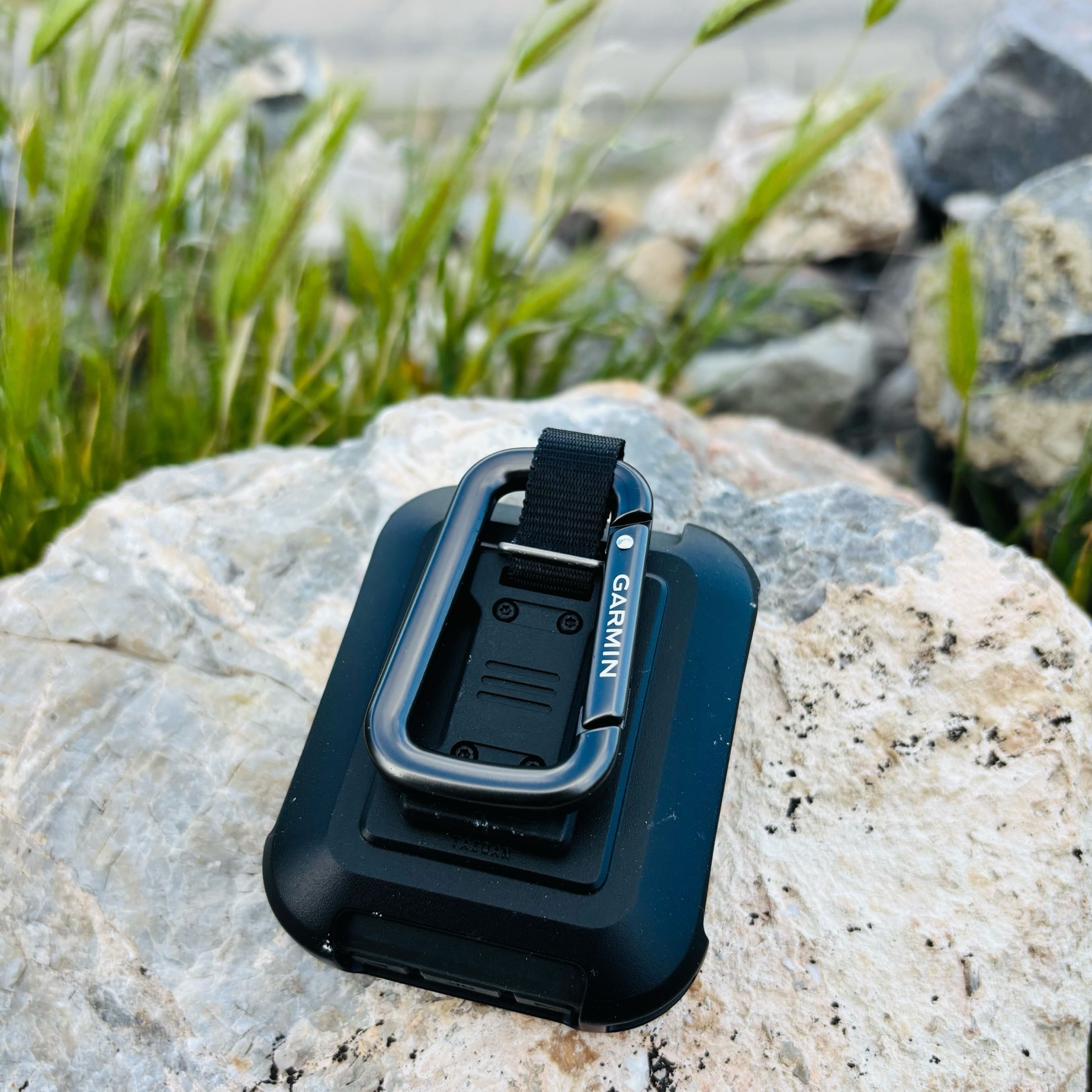
This is the reason I picked up the cradle: there are trips where Starlink stays in Pearl. Backpacking, day hikes, anything where I’m on foot and carrying only what’s on my back. The inReach Messenger comes with me instead — and the cradle is how I carry it properly.
It attaches to the back of the Messenger and gives you three ways to mount it:
- Carabiner — clip to a pack strap, belt loop, or zipper pull (this is what I use)
- Webbing loop — thread through a bag strap or MOLLE system
- Spine Mount 2 — for attaching to compatible Garmin surface mounts
The device rides on my pack shoulder strap, antenna pointing up toward open sky, completely hands-free. I forget it’s there until I need it. That’s exactly what you want from safety gear.
The Enabled Plan — What $7.99 Actually Gets You
Worth understanding clearly because “Enabled” doesn’t mean the same thing as “unlimited”:
| What’s Included | Enabled Plan ($7.99/mo) |
|---|---|
| SOS emergency response | ✓ Always included |
| Check-in messages / reactions | $0.10 each |
| Satellite text messages / weather | $0.50 each |
| Satellite photo & voice messages | $1.00 each |
| Satellite live tracking | $0.10 per ping (10 min+ interval) |
| Activation fee (one-time) | $39.99 |
The Enabled plan is essentially a pay-as-you-go structure with SOS always on. For my camping style — mostly weekends, some remote spots — I send maybe a handful of check-ins and a few texts per trip. Most months that’s $1–3 on top of the $7.99. Essentially $10/month all-in.
One thing worth knowing: when the Garmin Messenger app routes a message through your phone’s cellular or WiFi connection (not satellite), it doesn’t count against your plan at all. But this only happens when you have phone signal — the moment you’re truly off-grid, it switches to satellite and the per-message charges apply.
If you’re messaging constantly in the backcountry, move up to Essential ($14.99/month), Standard ($29.99/month), or Premium ($49.99/month) depending on how much you send.
Honest Downsides
You’ll depend on the phone app. Typing on the device itself is doable but slow. The Garmin Messenger app is good — but if your phone dies, you’re limited to short pre-set messages and SOS from the device itself. Carry a battery bank.
No turn-by-turn navigation. This device does TracBack only — it can navigate you back to your starting point, but it can’t load maps or plan routes. If you need navigation, that’s a separate Garmin device (or your phone with downloaded offline maps).
Per-message costs add up on Enabled. If you’re chatty, $7.99 is just the entry cost. Know your usage before committing to the cheapest plan.
Message delivery takes 30–60 seconds via satellite. Not a deal-breaker, but it’s not iMessage. Set expectations accordingly.
Should You Buy It?
- You camp solo or in small groups in remote areas — absolutely yes
- You want family to know where you are at all times — yes
- You hike, backpack, or explore off-trail — yes
- You only ever camp in established campgrounds with cell service — maybe think about it, but probably still yes
The question isn’t really whether it’s worth it. A device that can summon search and rescue from anywhere on Earth for $7.99/month is worth it. The question is whether you’re the kind of person who takes this seriously.
After enough time solo camping in places where my phone shows no signal for 48 hours straight, I am absolutely that person.
Quick Specs
| Spec | Detail |
|---|---|
| Device price | $249.99 |
| Plan (Enabled) | $7.99/month + per-use fees |
| Satellite network | Iridium (100% global coverage) |
| Battery life | Up to 28 days (10-min tracking) |
| Weight | 4 oz (113g) |
| Water rating | IPX7 |
| Message length | Up to 1,600 characters |
| SOS response | 24/7 via Garmin Response, under 60 sec |
| Phone required | For full functionality (Bluetooth) |
| Reverse charging | Yes — charges other devices via USB-C |
| Contract | None — month-to-month |
Where to Get It
The inReach covers safety everywhere. For high-speed internet back at camp, I pair it with the Starlink Mini →
Disclosure: This post contains referral links. I only recommend gear I personally use and pay for. Purchasing through a link costs you nothing extra and helps support Pearl.